


Highlights
- Thirty-one states have enacted AI disclosure laws for campaign materials, per Public Citizen tracking as of this month.
- Michigan, Oregon, and Kentucky have already produced enforcement disputes over unlabeled or satirical AI-generated political ads.
- An Arizona congressional candidate sued a super PAC this month over unlabeled billboards featuring AI-generated images of him.
- Constitutional challenges have already struck down deepfake election laws in California and Hawaii, with Montana's law now under challenge.
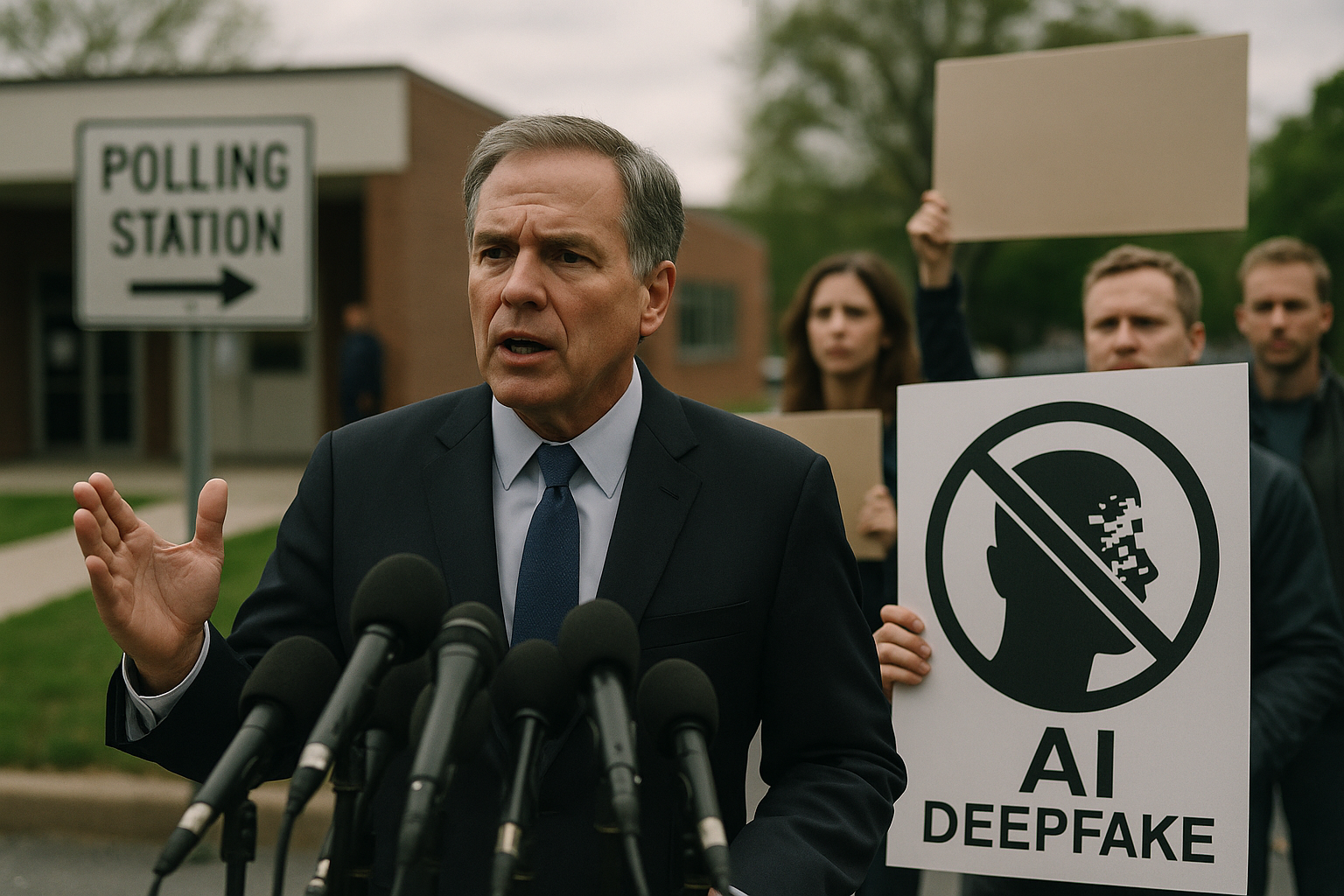
Thirty-one states have enacted laws requiring disclosure of AI-generated content in campaign materials, and the 2026 midterm elections are delivering the first sustained test of whether those laws can actually be enforced, Arizona Capitol Times reported Tuesday.
The laws, tracked by Public Citizen, typically require labeling when AI is used in political ads and give targeted candidates the right to seek injunctive relief in court. Minnesota and Texas go further, banning deepfake distribution within a set number of days of an election. Maryland bans them year-round.
Enforcement is already proving contentious. In Michigan, Senate Minority Leader Aric Nesbitt, a Republican who was then a candidate for governor, posted an AI-generated video to Facebook depicting Democratic Gov. Gretchen Whitmer about to be run over by a tractor. The ad was labeled as AI-generated, but Michigan Rep. Penelope Tsernoglou, who passed a pair of election deepfake laws in 2023, said using AI in a hostile or threatening way warrants a closer look from lawmakers. Nesbitt's campaign described the video as a parody.
In Oregon, Secretary of State Tobias Reed is investigating whether former Republican congressional candidate Jonathan Lockwood violated the state's 2024 AI disclosure law by posting unlabeled synthetic videos depicting his opponent, U.S. Rep. Janelle Bynum. Lockwood called the investigation a "frivolous censorship complaint" and characterized Oregon's law as unconstitutional.
In Kentucky, a conservative PAC ran an ad depicting Republican U.S. Rep. Thomas Massie as part of a throuple with Democratic Reps. Alexandria Ocasio-Cortez and Ilhan Omar. The ad carried a satirical disclaimer. Massie, who lost the primary to Ed Gallrein, said the ad contributed to his defeat, telling NBC's "Meet the Press" that the AI-generated video was effective with older voters.
An Arizona congressional candidate sued a super PAC this month over unlabeled billboards and signs featuring AI-generated images of him, according to reporting by the Phoenix New Times.
Ilana Beller, director of state AI governance and tech policy at Public Citizen, said most of this year's AI campaign content has either been labeled or was clearly satirical, and has not approached what she called the nightmare scenario. Scott Babwah Brennen, director of NYU's Center on Technology Policy, questioned whether labeling requirements are up to the task, and said more empirical research is needed into how AI is actually being used in campaigns and how consistently deepfake laws are being enforced.
Constitutional challenges have already trimmed the legal landscape: courts struck down deepfake election laws in California and Hawaii, though a California labeling requirement remains in effect. Montana's law is currently being challenged by a political committee facing complaints over unlabeled digitally altered mailers in two state legislative races.
The New Hampshire robocall case from January 2024, in which an AI-generated voice mimicking then-President Biden urged voters to skip the primary, resulted in a $6 million fine against political consultant Steve Kramer, who was acquitted of criminal charges.
Michigan Rep. Tsernoglou told the Capitol Times: "We are going to see [the laws] tested and stretched to their limits this year."
The next major enforcement flashpoint is expected as primary season accelerates into fall.
Sources
Every factual claim in this article traces to one of the sources below. See how we work for the editorial process.
- azcapitoltimes.com retrieved 21/07/2026 19:19
Authored by The Scottsdale Signal. Drafted by AI from primary-source material under our beat-specific editorial guides; reviewed by humans before publish under our five-gate process. Sources retrieved at 21/07/2026 19:19. Every claim traces to a source.

