Highlights
- Attorney General Kris Mayes filed suit Nov. 23 alongside 21 other attorneys general and Pennsylvania Gov. Josh Shapiro to block the HUD rule.
- HUD estimates 20,000 mixed-status families totaling 78,100 people would lose housing assistance, including 55,000 people who are themselves eligible for aid.
- The rule ends a 1997 congressional protection that allowed prorated subsidies for households with ineligible members, which the lawsuit says violates the Administrative Procedure Act.
- Displaced households could cost state and local governments $20,000 to $50,000 per person annually, according to the complaint.
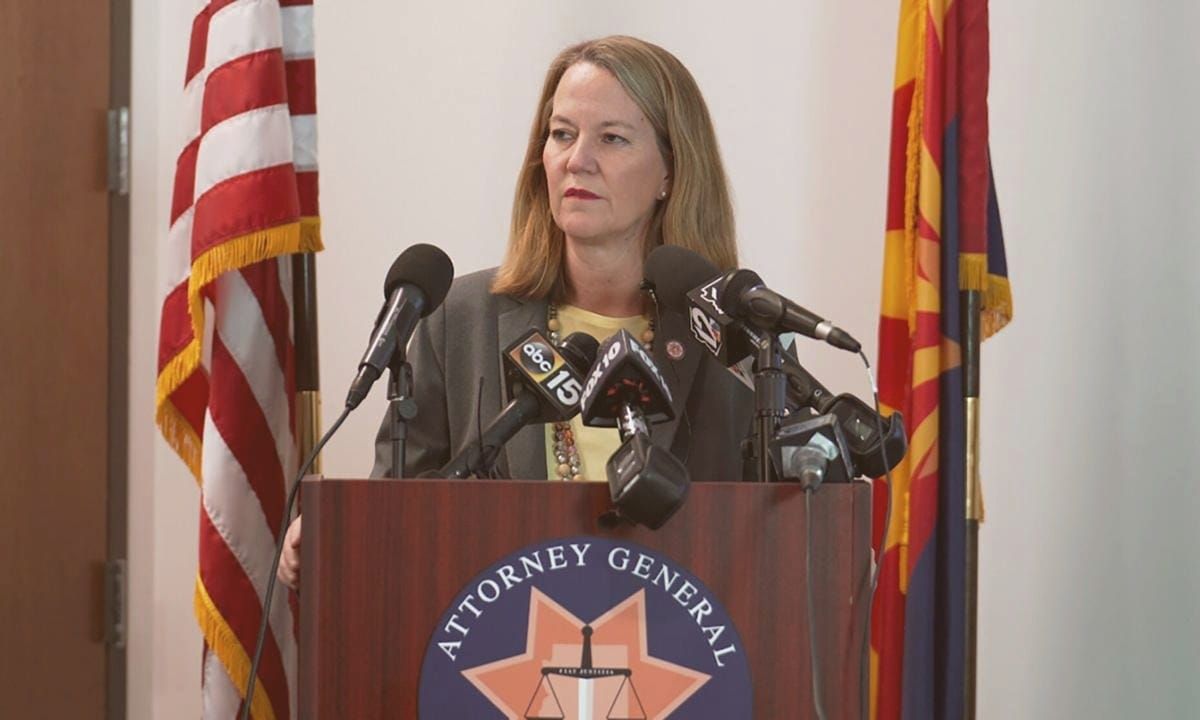
Arizona Attorney General Kris Mayes filed suit Monday to block a new federal rule that would eliminate U.S. Department of Housing and Urban Development aid for any household containing at least one person who is not a U.S. citizen or eligible immigrant, a change the complaint says would push tens of thousands of people into homelessness.
The lawsuit, filed alongside 21 other attorneys general and Pennsylvania Gov. Josh Shapiro, argues the rule illegally reverses nearly 30 years of federal housing policy. Under the existing framework, HUD reduces a family's subsidy through a system called proration, covering only eligible household members. Congress codified that protection in 1997, writing that families receiving aid "shall not" lose their benefits because an ineligible member lives with them. The new rule ends that protection entirely: a family could remain in HUD-assisted housing only if every member is a U.S. citizen or eligible immigrant.
HUD's own estimates put the impact at roughly 20,000 mixed-status families, totaling 78,100 people. Of those, 55,000 are themselves eligible for federal housing aid, including children and seniors.
The rule also requires all U.S. citizens enrolled in federal housing programs to verify citizenship through a Social Security number check against a federal database. Those the database cannot confirm would need to produce a birth certificate, passport, or naturalization certificate or face eviction.
What would the rule cost state and local governments?
The coalition's complaint estimates that sheltering each person displaced by the rule could cost governments $20,000 to $50,000 per year. The lawsuit also argues the rule would shrink the supply of affordable housing: HUD acknowledged that losing rental assistance could leave subsidized units vacant, reduce income for housing providers, and push landlords out of the Section 8 voucher program.
"Not only is this policy cruel, it also violates the law," Mayes said in a statement. "For decades Congress has recognized the importance of keeping families together even if not every member of a family qualifies for assistance. The Trump administration does not get to unilaterally change those protections."
Mayes is joined by the attorneys general of New York, California, Massachusetts, Colorado, Connecticut, Delaware, Hawaii, Illinois, Maine, Maryland, Michigan, Minnesota, New Jersey, New Mexico, Oregon, Rhode Island, Virginia, Vermont, Washington, Wisconsin, and Washington, D.C. The coalition is asking the court to declare the rule unlawful, strike it down, and block HUD from implementing or enforcing it against plaintiff states, their local governments, and their public housing authorities.
A hearing date has not been announced.
Sources
Every factual claim in this article traces to one of the sources below. See how we work for the editorial process.
- AZ Family (3TV/CBS5) retrieved 23/11/2026 20:08
Authored by The Scottsdale Signal. Drafted by AI from primary-source material under our beat-specific editorial guides; reviewed by humans before publish under our five-gate process. Sources retrieved at 23/11/2026 20:08. Every claim traces to a source.