


Highlights
- Arizona candidates are using AI to generate campaign ads, attack content, and fabricated photos, with minimal legal exposure under state law.
- Democrat Rick McCartney, running in the 1st Congressional District, says he is the first Arizona candidate to produce a fully AI-generated campaign ad.
- Sen. Mark Finchem posted AI images depicting Secretary of State Adrian Fontes in handcuffs and before a judge, with only one of the two posts carrying an AI disclosure.
- Arizona's two AI election statutes allow judges to fine violators $10 per day and declare content fake, but cannot order removal of the material.
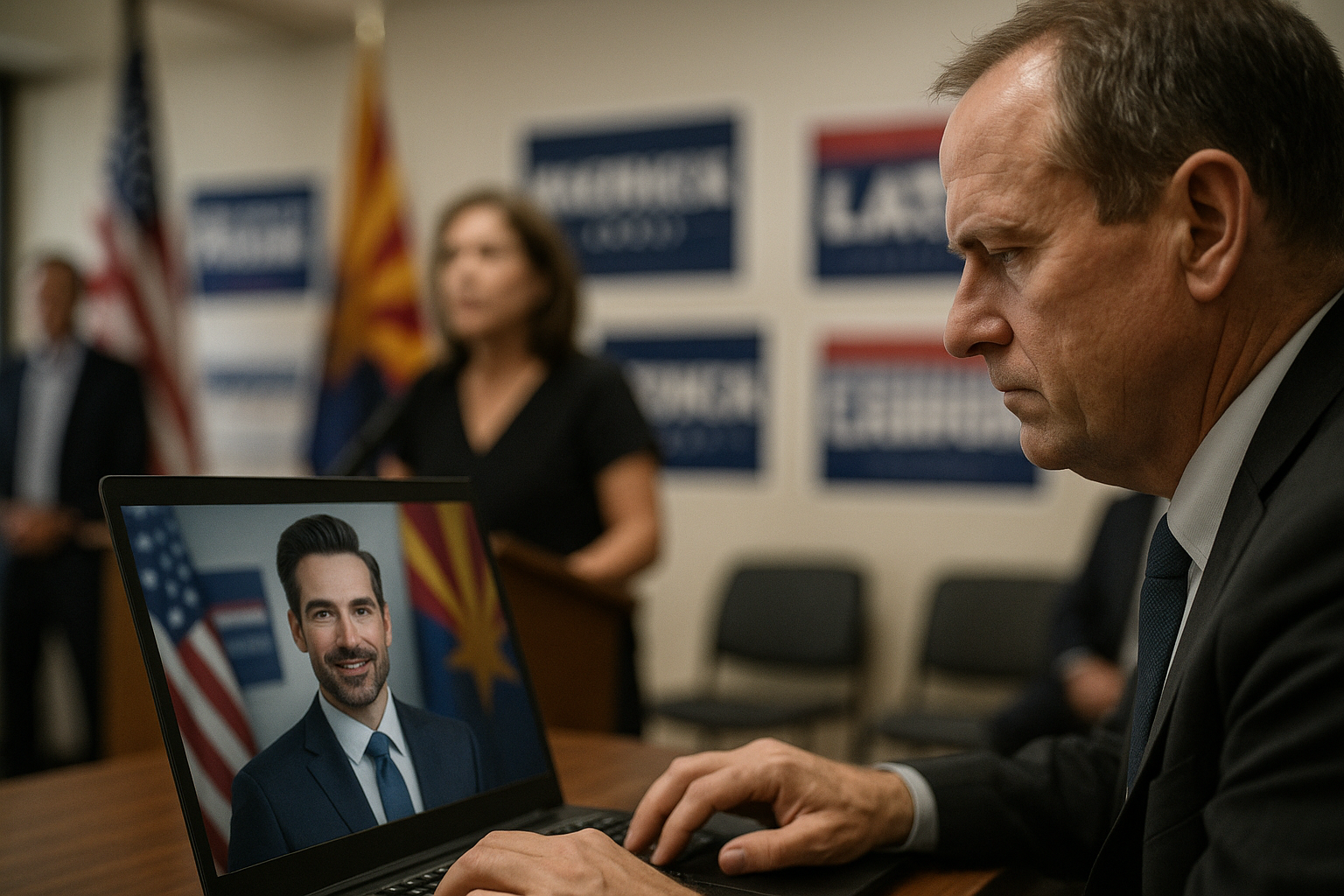
Arizona political candidates are generating fabricated photos, parody videos, and attack content using artificial intelligence, while the state's two statutes governing AI in elections provide little practical recourse for those targeted.
Rick McCartney, a Democrat running in the crowded 1st Congressional District field, says his campaign produced what appears to be the first fully AI-generated political ad by an Arizona candidate. The ad features memes of President Donald Trump and Vice President J.D. Vance as a critique of dysfunction in Washington. McCartney said his team intentionally included an AI disclosure and used imagery designed to be unbelievable rather than deceptive. "We weren't trying to create other realities. We were trying to play on stuff that other people had created or that had gone viral in some way," McCartney told the Arizona Capitol Times.
Other candidates are using the technology more aggressively. Senate Majority Leader John Kavanagh, the Fountain Hills Republican, posted a video depicting himself as a Ghostbuster and his primary opponent Robert Wallace as a "bathroom spirit," with a Gemini watermark visible in the corner. Kavanagh also built a website featuring AI-generated photos of Wallace tied to Reddit posts Wallace allegedly made about psychedelics and reincarnation. Wallace told the Capitol Times he found the whole thing hilarious.
Sen. Mark Finchem, R-Prescott, posted two AI images of Secretary of State Adrian Fontes on April 29 and May 4, one showing Fontes being led away in handcuffs and another showing him bowed before an angry judge. Both posts included donation solicitations; only one carried a clearly labeled AI disclosure. Former Maricopa County Recorder Stephen Richer was depicted in a separate image with red eyes and clasped hands as ballots and dollar bills fell in front of a stormy Recorder's Office. Richer made the image his profile photo and said AI has not changed people's underlying attitudes so much as it has amplified their capacity to act on them. "Mark Finchem said deceitful stuff about me before AI was created," Richer told the Capitol Times. "Now he just gets to depict it."
Rep. Walt Blackman, R-Snowflake, has posted AI photos that appear to show him meeting with constituents and border patrol agents, though the candidate in the images does not closely resemble Blackman. One photo shows him outside a shop with a misspelled sign reading "mercnatile." Blackman's posts carry no AI disclosures.
Arizona law requires AI disclosures on manipulated content posted within 90 days of an election and allows a judge to fine violators $10 per day or declare content fake, but a judge cannot order removal or impose fines solely for creating AI content. Popular generators including Gemini and Grok automatically add watermarks, which in some cases serve as the only disclosure present.
McCartney said he supports AI innovation but called for stronger guardrails, telling the Capitol Times the technology is already shaping elections, jobs, privacy, healthcare, education, and national security. His campaign plans to post signs featuring an AI-generated version of himself wearing boxing gloves. The Arizona Capitol Times story by Brock Blasdell, published May 29, is the first comprehensive account of how candidates across the state are deploying the technology this cycle. The legislature's approach to tightening the statutes is the next pressure point to watch.
Sources
Every factual claim in this article traces to one of the sources below. See how we work for the editorial process.
- azcapitoltimes.com retrieved 29/05/2026 20:06
Authored by The Scottsdale Signal. Drafted by AI from primary-source material under our beat-specific editorial guides; reviewed by humans before publish under our five-gate process. Sources retrieved at 29/05/2026 20:06. Every claim traces to a source.

