


Highlights
- The Arizona Court of Appeals ruled that submitting fake AI-generated case citations is sanctionable conduct regardless of intent.
- The ruling arose from a Maricopa County probate case in which a self-represented litigant cited six deficient cases, two of which do not exist.
- Jeffrey Kotchka must pay the portion of his sister's attorney's fees tied to addressing the false citations; his appeal was also rejected.
- The court said AI tools are permissible for drafting but that all filers must independently verify every citation before submitting.
The Arizona Court of Appeals has put every attorney and self-represented litigant in the state on notice: submitting AI-hallucinated case citations is sanctionable conduct, full stop, regardless of whether the filer meant to deceive anyone.
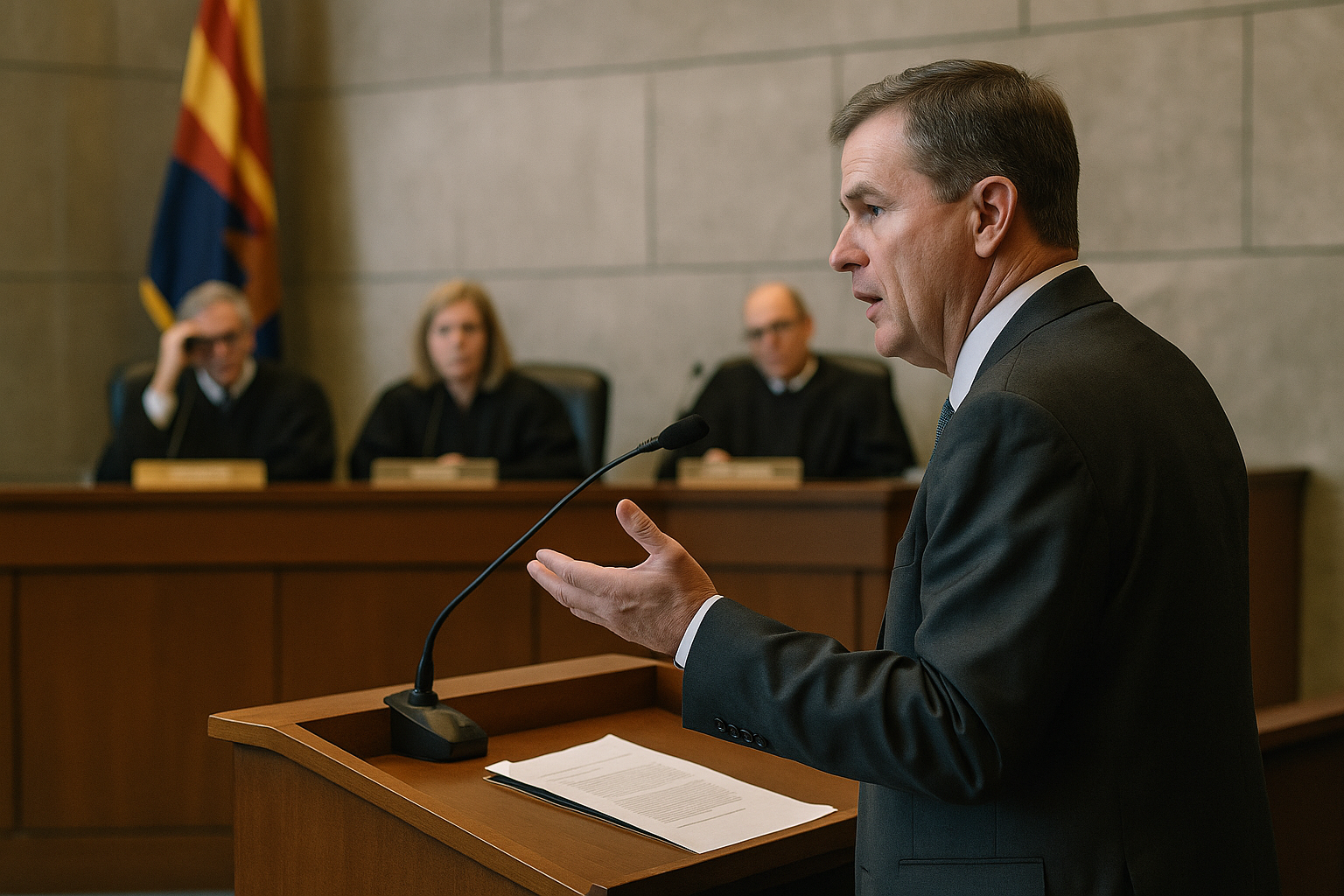
The unanimous ruling, reported Thursday by the Arizona Mirror, is the first published Arizona appellate opinion addressing generative AI hallucinations in legal filings. Writing for the three-judge panel, Judge Brian Furuya stated that accepting a defense of innocent intent "would legitimize reckless indifference to the truth and accuracy of court filings and tolerate some level of misrepresentation."
The case grew out of a Maricopa County probate dispute. Gloria Acciavatti died in June 2023 at 93, leaving three adult children. Her daughter, Kim Dineen, sought appointment to administer the estate and found the assets were titled in her brother Jeffrey Kotchka's name. Dineen went to court in February 2024; a Maricopa County judge sided with her and appointed her personal representative in July 2025. Kotchka, representing himself, appealed.
In his opening brief, Kotchka made eight citations. The court found six deficient: some pointed to wrong pages, some attributed rules or facts to cases that didn't contain them, and two were cases that "simply do not exist." Kotchka acknowledged at a court hearing that he relied on generative AI to write the brief and admitted he did nothing to independently verify the citations. He also conceded he had not used materials on the Court of Appeals' website for self-represented litigants, which includes a guide with tips and warnings for using AI tools.
Does intent matter when AI fabricates a legal citation?
No, according to the Court of Appeals. The panel ruled that reliance on generative AI does not absolve any party, licensed attorney or layperson, from complying with court rules. Because Kotchka claimed no intent to deceive and is not a trained legal professional, the court opted for a narrow sanction: he must pay the portion of Dineen's attorney's fees traceable to dealing with the false citations. His appeal was also rejected outright, as no supportive legal authorities remained once the inaccurate and false citations were stricken.
The court was careful to frame the problem as one of verification, not technology. Generative AI can check grammar, tighten prose, and summarize long documents, Furuya wrote, and the panel said it recognizes the promise such tools hold for people who cannot afford a lawyer, provided the person signing the brief checks to make sure all cited cases are real and accurately cited.
The ruling has been corroborated by the American Bar Association and AZ Big Media, among others. The amount Kotchka owes depends on documentation Dineen submits to the court.
Where to find them
- American Bar · americanbarnyc.com · Instagram
Sources
Every factual claim in this article traces to one of the sources below. See how we work for the editorial process.
- azmirror.com retrieved 16/07/2026 14:06
- American Bar (official site) retrieved 16/07/2026 14:06
Authored by The Scottsdale Signal. Drafted by AI from primary-source material under our beat-specific editorial guides; reviewed by humans before publish under our five-gate process. Sources retrieved at 16/07/2026 14:06. Every claim traces to a source.

