


Highlights
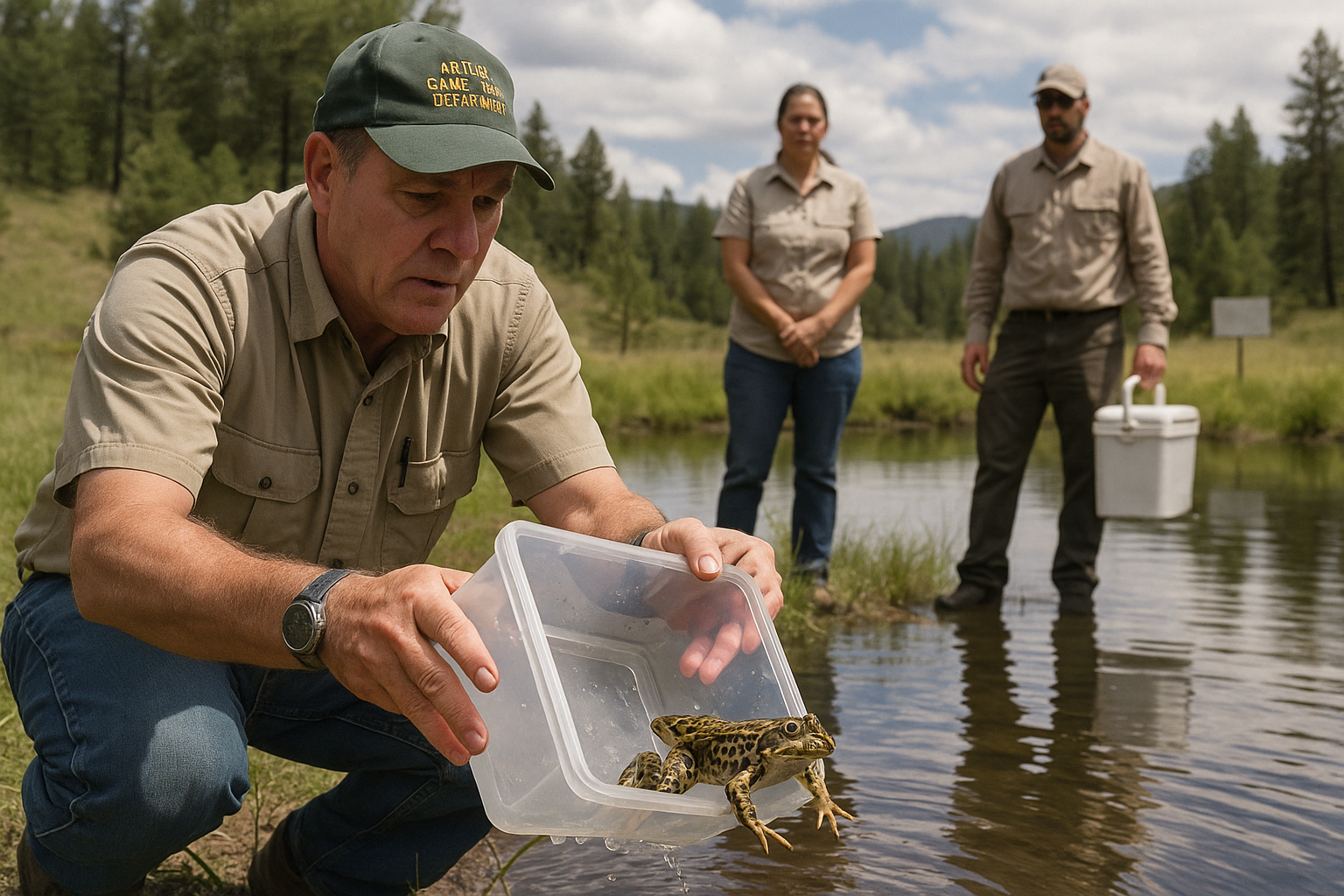
- The Arizona Game and Fish Department and the Amphibian and Reptile Conservancy have spent six weeks building six new ponds in the White Mountains to support recovery of the Chiricahua leopard frog.
- The frog has been listed as threatened under the Endangered Species Act since 2002, with drought and a fungal infection called chytridiomycosis cited as primary threats to its survival.
- Known distinct populations have quadrupled in the past five years, from roughly 35 in the 1990s, and the Phoenix Zoo released 4,000 tadpoles into the Mogollon Rim most recently.
- Pond locations are kept confidential to prevent humans from inadvertently introducing the fungus that has contributed to the decline of at least 501 amphibian species worldwide.
The Arizona Game and Fish Department and the nonprofit Amphibian and Reptile Conservancy have spent the past six weeks constructing six new ponds in the White Mountains of northeastern Arizona, targeting recovery unit RU6 for the Chiricahua leopard frog, a species listed as threatened under the Endangered Species Act since 2002, the Arizona Mirror reported Monday.
The ponds sit on land managed by Game and Fish and the state Land Department, where cattle tanks are being repurposed into permanent frog habitat. The largest, Pond 3, was built from a failed ranch pond whose sandy volcanic soil could not retain water. Wetland engineer Thomas Biebighauser solved the problem by excavating a 9-foot-deep basin lined with what he described as "essentially a pool liner" covered in a foot of dirt and rocks, with a restructured dam serving as an overflow area. Firefighters from the Arizona Department of Forestry and Fire Management joined ARC volunteers and Game and Fish staff to complete the pond in a single day.
One of the six ponds will have a year-round well; the others will rely on rainwater. Exact locations are confidential: the primary biological threat to the frogs is chytridiomycosis, a fungal infection that first affected frog populations in the early 1990s and has been linked to the decline of at least 501 amphibian species worldwide. Humans and animals can carry the fungus without knowing it.
The Phoenix Zoo has maintained a captive-breeding program for the species since 1995. In 2022 it released 228 frogs to the White Mountains area where the new ponds are being built, and most recently released 4,000 tadpoles into the Mogollon Rim. Tara Harris, the zoo's director of conservation and science, told the Mirror that known distinct populations have quadrupled in the past five years after standing at roughly 35 in the 1990s.
Drought and rising temperatures compound the fungal threat. Harris said long-term growth has been one of the biggest survival challenges in recent decades, with drier conditions reducing marshland habitat across the state.
The Gila Herald and Tucson Sentinel have also covered the pond-restoration effort; the Federal Register listing confirming the 2002 threatened designation is available from the U.S. Fish and Wildlife Service.
The ponds are expected to allow researchers to monitor the frog population more easily once frogs are introduced; no release date for the White Mountains ponds has been announced.
Sources
Every factual claim in this article traces to one of the sources below. See how we work for the editorial process.
- azmirror.com retrieved 18/05/2026 13:22
Authored by The Scottsdale Signal. Drafted by AI from primary-source material under our beat-specific editorial guides; reviewed by humans before publish under our five-gate process. Sources retrieved at 18/05/2026 13:22. Every claim traces to a source.

