


Highlights
- Arizona's AHCCCS enrollment fell roughly 200,000 members over the past year, a 9% decline, according to the agency.
- H.R. 1 imposes new work and re-enrollment requirements starting later this year, with state officials estimating 418,000 current members will be affected.
- Eight Arizona hospitals — six in Phoenix, one in Tucson, one in Bullhead City — are at risk of closure or reduced services partly due to the law's impacts, per a Public Citizen report.
- AHCCCS received $10.2 million in the state budget for eligibility staffing and launched KeepMyAHCCCS.com to help members navigate the changes.
Arizona's Medicaid rolls have shed roughly 200,000 members over the past year, and a new federal law is expected to accelerate that decline. The Arizona Health Care Cost Containment System (AHCCCS) counted more than 1.9 million members a year ago; by last month that figure had fallen to about 1.7 million, a 9% drop, according to the agency.
The pressure is set to intensify. H.R. 1, the federal law more commonly known as the One Big Beautiful Bill Act, imposes new work and re-enrollment requirements beginning later this year and continuing into 2027. State officials estimate the law will affect about 418,000 current AHCCCS members, even though it does not change Medicaid's existing income limits, which range from roughly $1,400 to $3,400 a month depending on household size.
The new requirements include earning at least $580 a month or completing 80 hours of approved activities such as school, job training, community service, or volunteering. Most adults will also have to renew coverage every six months rather than annually. Exemptions are available for Indigenous members, veterans with disability status, caregivers, people with complex health conditions or substance use disorders, and others, according to the AHCCCS website.
Will Humble, executive director of the Arizona Public Health Association, warned in a June presentation that income thresholds create difficult tradeoffs for workers near the eligibility line. "You have to think through, 'OK, if I take this promotion, I might be worse off because I'm going to lose Medicaid. I'm going to have to pay $600 to $1,000 a month or more for my health insurance, and I'll be worse off than I am today,'" he said. Humble noted that even overtime pay can push a worker over the 138% poverty threshold.
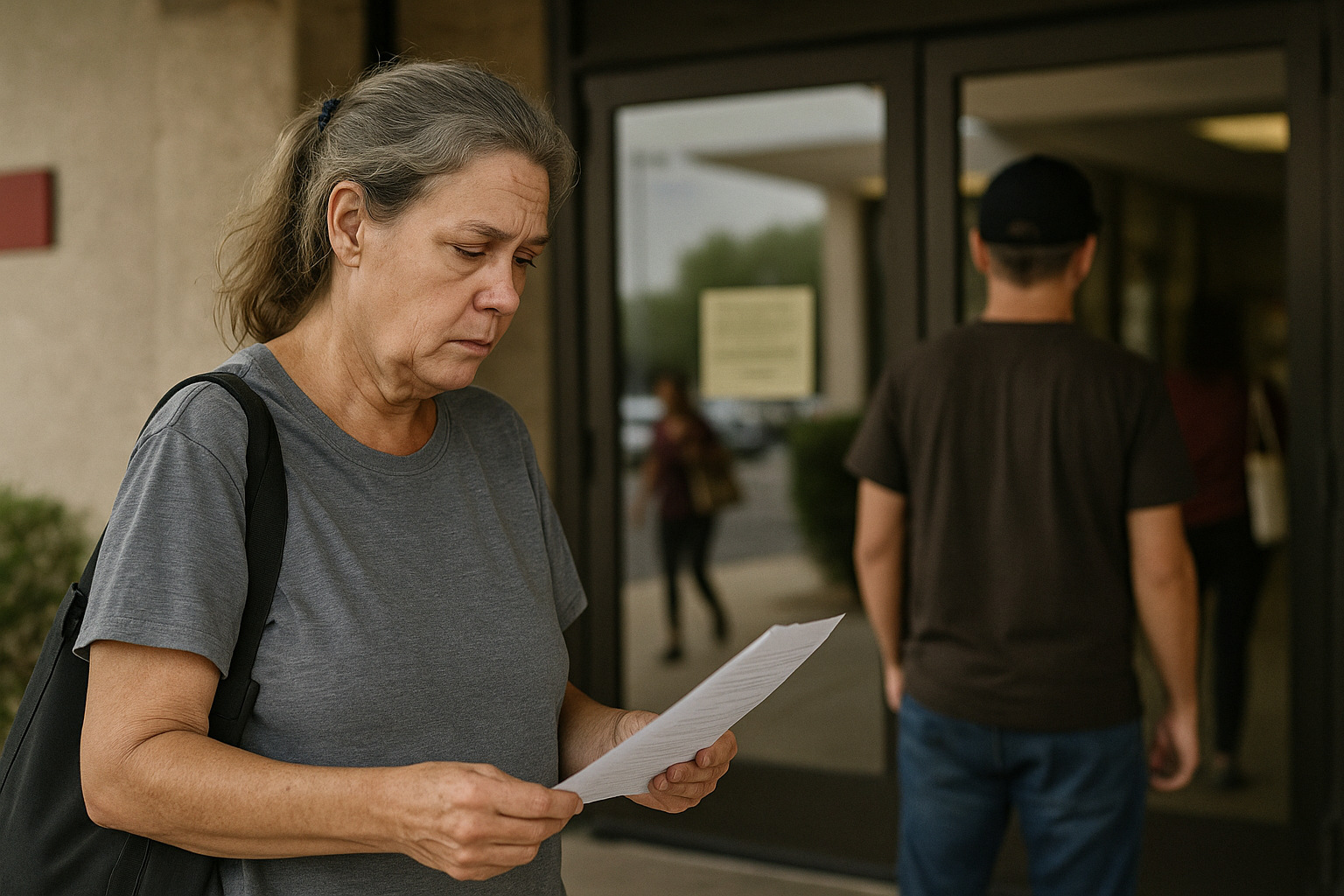
The enrollment decline is already playing out in individual households. Nicole Ray, a 30-year-old wheelchair assistant at Phoenix Sky Harbor International Airport and single mother of two, lost AHCCCS coverage after her income exceeded the eligibility limit by $100. She found an ACA marketplace plan for $30 a month, but when enhanced federal subsidies expired last year her premium jumped to $220. Unable to afford that, she stopped taking several medications, including one for opioid dependence and others for anxiety and depression, reporting a difficult withdrawal period. Her son's Nutrition Assistance benefits were also cut; the family has appealed but not yet received a decision, according to the Arizona Capitol Times report.
Hospitals stand to absorb much of the financial fallout, particularly outside metro Phoenix. A March report from consumer advocacy organization The Public Citizen identified eight Arizona hospitals at risk of closure or reduced services partly due to H.R. 1 impacts: six in Phoenix, one in Tucson, and one in Bullhead City.
AHCCCS said in an emailed statement that its focus is on minimizing disruptions and that H.R. 1 "has put that lifeline at risk by creating new hurdles for people to access critical health care." The agency received $10.2 million in the state budget for eligibility staffing and launched KeepMyAHCCCS.com as a central resource for eligibility information, renewals, and exemptions.
The law takes full effect in January 2027. Humble said the practical test will be whether the agency can hire, train, and deploy eligibility staff fast enough for members to feel the benefit of the $10.2 million appropriation.
Sources
Every factual claim in this article traces to one of the sources below. See how we work for the editorial process.
- azcapitoltimes.com retrieved 03/09/2026 22:16
Authored by The Scottsdale Signal. Drafted by AI from primary-source material under our beat-specific editorial guides; reviewed by humans before publish under our five-gate process. Sources retrieved at 03/09/2026 22:16. Every claim traces to a source.

