


Highlights
- Arizona added 337 megawatts of solar capacity in Q1 2026, the eighth-highest among U.S. states, per the Solar Energy Industries Association.
- Total installed capacity reached 11.75 gigawatts, moving Arizona to fourth in the nation for solar.
- Salt River Project and EDP Renewables completed Flatland Energy Storage, a 200-megawatt battery system near Coolidge capable of powering 44,500 homes at peak demand.
- Nationally, new solar and storage installations fell 27% year-over-year in Q1, though utility-scale contracts rose 15% as AI-driven power demand accelerates.
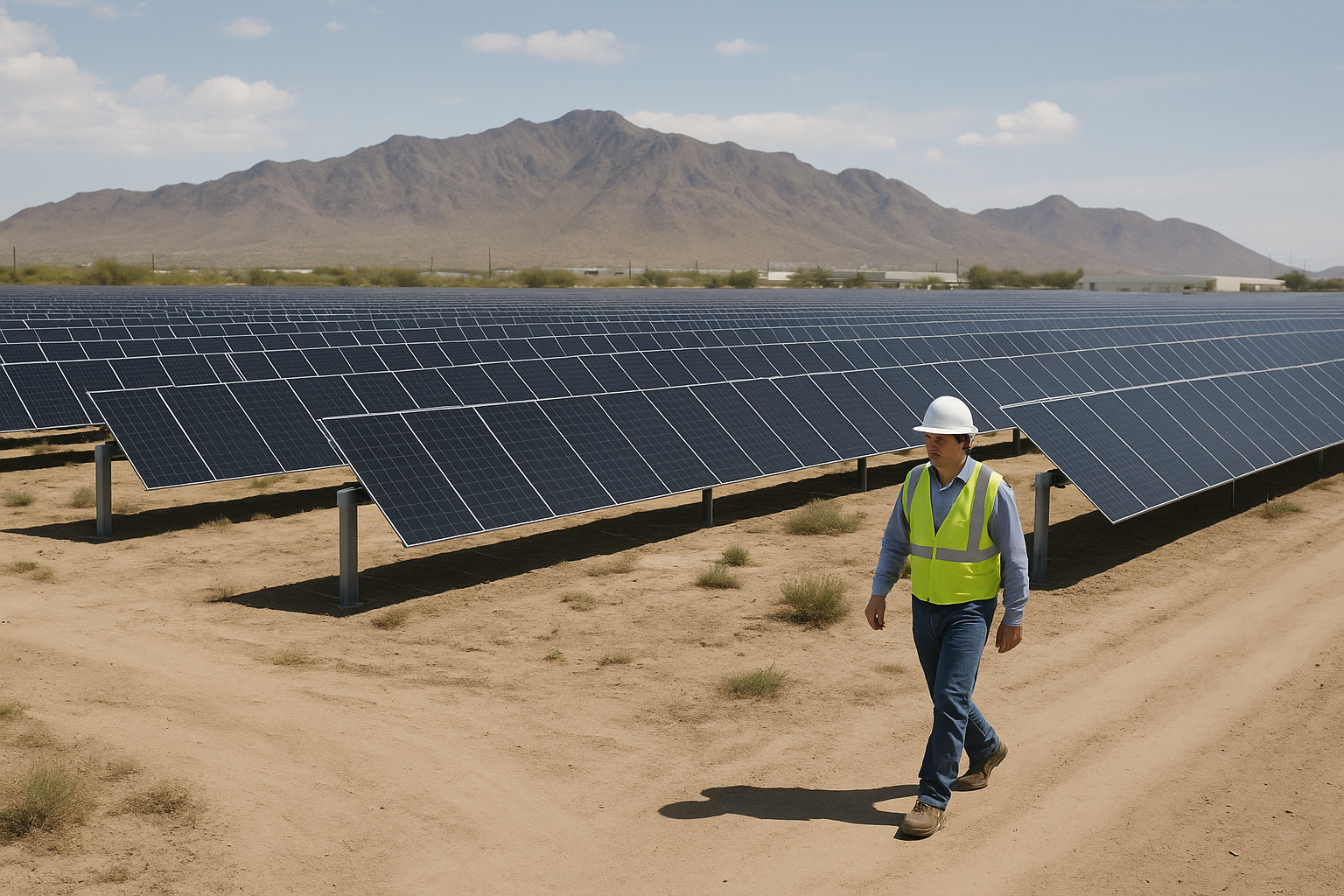
Arizona's solar buildout continued at pace in the first quarter of 2026, with the state adding 337 megawatts of new capacity to reach 11.75 gigawatts total installed, enough to rank fourth in the nation, according to the Solar Market Insight report released June 10 by the Solar Energy Industries Association and research firm Wood Mackenzie, as the Phoenix Business Journal also reported.
The 11.75-gigawatt figure counts both residential and commercial installations. At the end of 2024, Arizona held fifth place nationally with 9.5 gigawatts of total capacity.
The quarter's headline project: nonprofit Valley utility Salt River Project and EDP Renewables completed Flatland Energy Storage, a 200-megawatt battery energy storage system just outside the Pinal County town of Coolidge. The site is part of the Brittlebrush Solar Park and can power roughly 44,500 homes during periods of peak demand, SRP said. The completion follows a separate SEIA finding that Arizona installed the nation's second-highest amount of utility-scale energy storage capacity during Q1 2026.
The state's gains came against a softening national backdrop. Across the country, new solar and storage installations totaled 7.8 gigawatts in Q1, a 27% decline from a year earlier and a 42% drop from Q4 2025. Utility-scale solar contracts, however, rose 15% year-over-year as technology companies race to lock in power for AI infrastructure.
SEIA Interim President and CEO Darren Van't Hof attributed the national slowdown to policy headwinds: "As power demand skyrockets, political and regulatory attacks are slowing down the exact resources we rely on. Impeding the only sector that is actively building new power is a reckless gamble that will only drive electricity bills higher."
The report's authors forecast relative flatness in U.S. solar additions over the next five years, with residential installations projected to fall 21% nationally this year before returning to growth. SEIA and Wood Mackenzie said the quarterly data is collected from nearly 200 utilities, state agencies, installers, and manufacturers.
The next SEIA Solar Market Insight quarterly report is expected in September.
Sources
Every factual claim in this article traces to one of the sources below. See how we work for the editorial process.
- aztechcouncil.org retrieved 26/06/2026 17:38
Authored by The Scottsdale Signal. Drafted by AI from primary-source material under our beat-specific editorial guides; reviewed by humans before publish under our five-gate process. Sources retrieved at 26/06/2026 17:38. Every claim traces to a source.

