Highlights
- The Arizona Supreme Court on Thursday refused to elevate its Prop. 145 ruling to binding precedent, limiting the decision to that case alone.
- Chief Justice Ann Scott Timmer wrote that the order cannot create precedent because it was issued without oral argument after an expedited briefing schedule.
- Prop. 145 was removed from the ballot after courts found its severability clause violated the single-subject rule by effectively nullifying future voucher regulation.
- The ruling's non-precedential status leaves lower courts without formal legal authority to cite it when evaluating similar ballot-measure challenges.
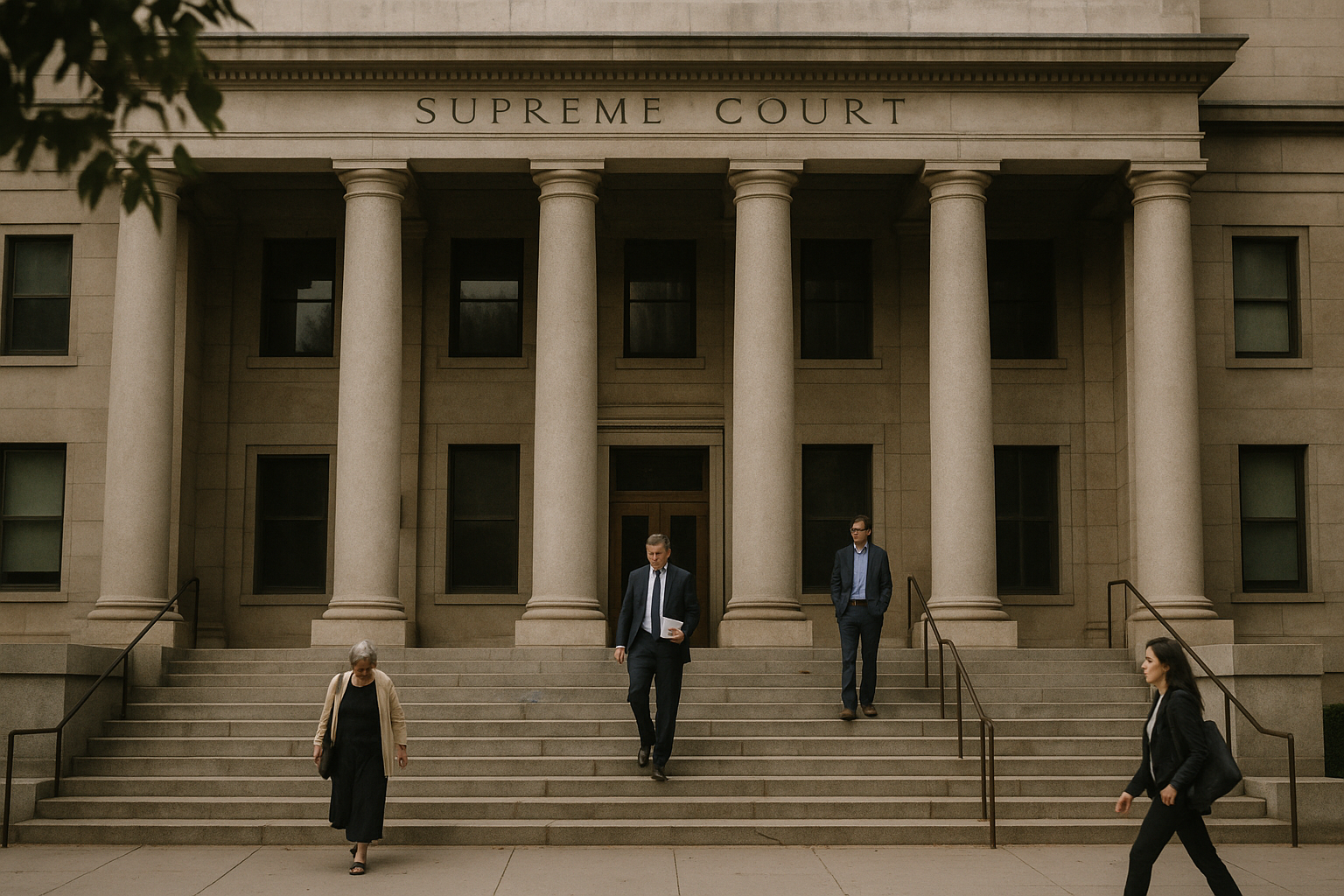
The Arizona Supreme Court on Thursday declined to convert its August ruling removing Proposition 145 from the ballot into binding precedent, rejecting a request from Attorney General Kris Mayes that would have given lower courts across the state formal authority to cite the decision in future ballot-measure disputes.
Prop. 145 was framed as a constitutional amendment protecting school voucher funding for military families through Arizona's Empowerment Scholarship Account program. But a trial court judge and the Supreme Court unanimously concluded it violated the single-subject rule by embedding a second, sweeping provision: a severability clause engineered to nullify any future law that diminished ESA funding for military families, even the constitutional portions of that law.
Chief Justice Ann Scott Timmer, writing for the court, found the two provisions lacked the necessary connection. "While both affect substantive law, the provisions do not share a logical relationship or derive meaning and effect from each other," she wrote.
Mayes's office argued the question was too important to leave unresolved as precedent. Nathan Arrowsmith, deputy chief counsel for the Arizona Solicitor General's Office, wrote that whether proposed constitutional amendments comply with the Separate Amendment Rule "is plainly one of substantial public importance that may recur whenever a proposed amendment is referred to the ballot."
Timmer rejected the request on procedural grounds. Because the court acted on an expedited briefing schedule and heard no oral arguments, the resulting order is a summary disposition. "Decision orders are summary dispositions, often entered on an expedited basis and without oral argument," she wrote, explaining why it cannot carry precedential weight.
The practical consequence: the legal reasoning that stopped Prop. 145 cannot be formally cited by judges evaluating similar attempts to embed nullification provisions in future ballot measures. The Arizona Capitol Times and Ballotpedia have both tracked the broader wave of school-choice ballot litigation that left the 2026 ballot without a citizen initiative on the topic.
Why does precedent status matter here?
Because the Prop. 145 severability clause was a novel drafting strategy, a precedential ruling would have given trial and appellate judges a clear legal basis to reject copycat provisions in future measures. Without it, challengers must relitigate the same constitutional arguments from scratch each time a similar clause appears on a ballot referral.
The Prop. 145 question is resolved. Any future ballot measure using a comparable nullification-style severability clause will face a fresh legal challenge without the benefit of this ruling as controlling authority.
Sources
Every factual claim in this article traces to one of the sources below. See how we work for the editorial process.
- azmirror.com retrieved 05/09/2026 00:16
- azcapitoltimes.com retrieved 05/09/2026 00:16
- news.ballotpedia.org retrieved 05/09/2026 00:16
Authored by The Scottsdale Signal. Drafted by AI from primary-source material under our beat-specific editorial guides; reviewed by humans before publish under our five-gate process. Sources retrieved at 05/09/2026 00:16. Every claim traces to a source.