Highlights
- The Arizona Supreme Court must rule by Aug. 20 on whether Prop. 212 qualifies for the November ballot.
- A 75.2% signature validity rate lands almost exactly on the threshold — the outcome turns on whether invalidated signatures were double-counted.
- If the court sides with backers, roughly 24,000 additional signatures enter the count, likely keeping the measure alive; if not, it fails.
- Opponents, including the Arizona Free Enterprise Club and Goldwater Institute, say the trial court correctly applied existing caselaw.
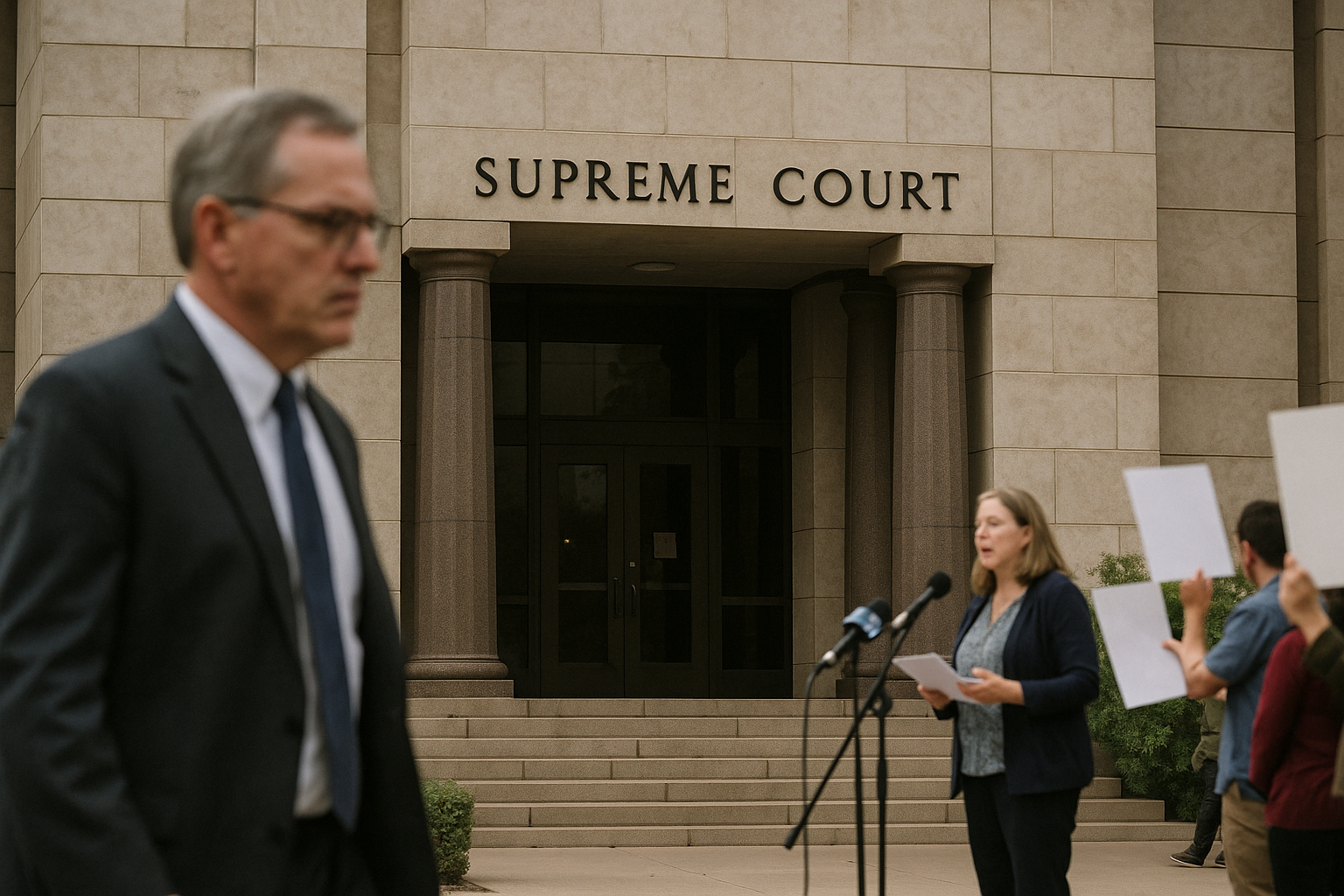
Whether Scottsdale and Paradise Valley property owners, many of whom use the state's Empowerment Scholarship Account program to fund private schooling, will vote this fall on sweeping new voucher restrictions depends entirely on a single legal question the Arizona Supreme Court is expected to answer by Aug. 20.
Proposition 212, formally the Protect Education Act, would add an income eligibility cap to the universal voucher system, crack down on voucher misuse, and require schools accepting voucher payments to meet certain educational and safety requirements. The measure is backed by Arizona's largest teachers union and public school advocates, who submitted almost 420,000 signatures in July. The Secretary of State's Office determined that only about 389,000 were eligible for verification.
A 5% random sample of those signatures was sent to county recorders statewide. The 15 counties returned a combined validity rate of 75.2%, which is then projected onto the full eligible population rather than checking all 389,000 by hand. Following a trial court ruling that disqualified tens of thousands of challenged signatures, the two sides agreed that roughly 317,000 is the minimum number of valid signatures against which that rate will be applied, with a maximum of nearly 352,000. The minimum requirement to qualify is 255,949 signatures.
The 75.2% rate lands almost exactly on the qualifying threshold. Which side of that line Prop. 212 falls on depends entirely on how the court handles a dispute over duplicate signatures. The Protect Education Accountable Now committee argues that a trial court judge's method for removing challenged signatures, combined with the counties' own duplicate-catching process, effectively double-counts some invalidated signatures. The Goldwater Institute and Arizona Free Enterprise Club counter that the judge correctly applied existing caselaw and that opponents simply want known duplicates treated as valid.
If the Supreme Court accepts the backers' argument, about 24,000 additional signatures enter the count, just enough to qualify the measure for the ballot. If it doesn't, no remaining scenario produces a qualifying total.
Opponents declared victory before the court ruled. Scot Mussi, president of the Arizona Free Enterprise Club, said in a written statement that the campaign spent more than $7 million trying to dismantle school choice but still could not collect enough lawful, valid signatures to qualify for the ballot.
But Olivia Fierro, a spokeswoman for the Protect Education Accountable Now committee, pushed back, saying the campaign is reviewing validity checks done by the counties, particularly Maricopa County's submission, which covers about 60% of the state's voters, for errors that could increase the validity rate. Even a corrected rate, she acknowledged, likely won't be enough without a favorable ruling on the double-counting question.
The court is also weighing three secondary arguments that carry smaller stakes for Prop. 212 but could reshape future initiative campaigns. The most consequential: whether a petition circulator's required "residence address" means where they are living at the time of circulation or a permanent domicile. A ruling favoring permanent domicile could effectively end the use of out-of-state circulators who work Arizona campaigns from shelters or extended-stay hotels.
The court's ruling is expected before Aug. 20, the deadline for printing November ballots.
Sources
Every factual claim in this article traces to one of the sources below. See how we work for the editorial process.
- azmirror.com retrieved 18/08/2026 00:55
Authored by The Scottsdale Signal. Drafted by AI from primary-source material under our beat-specific editorial guides; reviewed by humans before publish under our five-gate process. Sources retrieved at 18/08/2026 00:55. Every claim traces to a source.