Highlights
- Arizona's Supreme Court upheld the 2022 voter-approved Proposition 211, which requires groups spending $50,000-plus on statewide races to disclose donors who gave at least $5,000.
- The court's 4-3 opinion rejected facial constitutional challenges and privacy-rights arguments, but revived a narrow as-applied free speech claim for trial court review.
- Former Attorney General Terry Goddard, a main backer of Prop 211, said the ruling resolved nearly all constitutional objections in the law's favor.
- Two additional challenges to Proposition 211 remain active in separate courts, including a federal case brought by Americans for Prosperity.
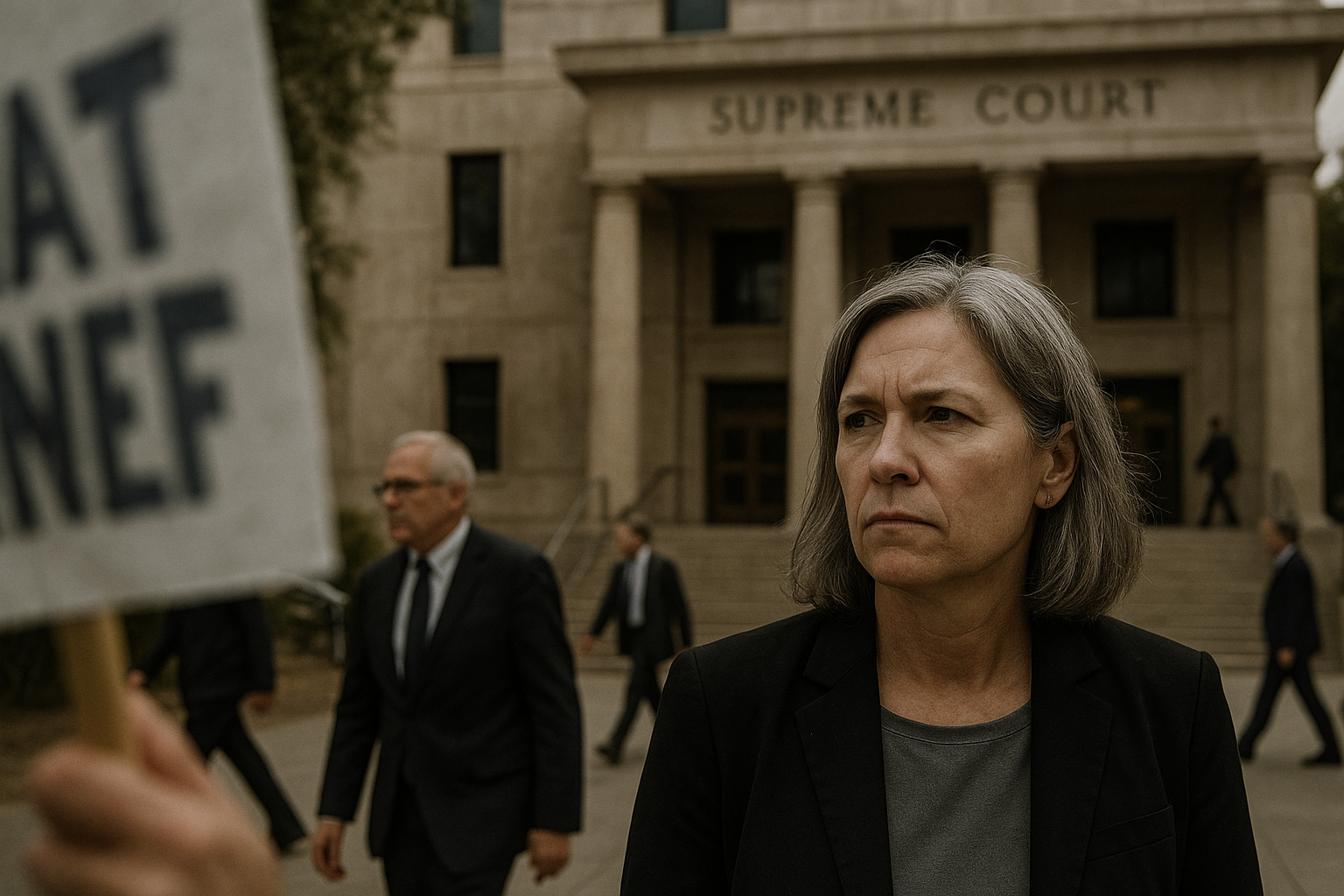
Arizona's Supreme Court has largely upheld the state's voter-approved donor-disclosure law, keeping in place requirements that force political spending groups to identify their largest backers while sending a narrow free speech claim back to a lower court for trial.
The 4-3 opinion, written by Chief Justice Ann Scott Timmer, rejected arguments that the "Voters Right to Know" Act is unconstitutional on its face or that it violates privacy rights in the state constitution. Voters approved Proposition 211 in November 2022 with more than 70% support. The law requires any organization spending more than $50,000 on a statewide race, or half that on other contests, to publicly disclose anyone who has given at least $5,000, and to trace contributions back to their original source to prevent wealthy donors from obscuring their identities through intermediary nonprofits.
The Center for Arizona Policy and the Arizona Free Enterprise Club brought the challenge, joined by two unnamed donors who contend they could face harassment or retaliation if identified. Timmer rejected their broadest arguments by pointing to provisions in Arizona's original constitution directing the Legislature to enact laws requiring general publicity for campaign contributions. She wrote that Arizonans at statehood understood the constitution itself required certain disclosure laws, even when doing so might incidentally restrain or compel expression.
The court did allow one as-applied free speech claim to move forward. Timmer wrote that the two groups and their unnamed donors had made allegations that were "minimally sufficient to make a threshold showing that the Act's disclosure provisions impose a concrete, non-speculative burden on CAP's and FEC's expressive activities," entitling them to try to prove that in trial court. The Goldwater Institute, whose lawyers argued the case, called the revival a victory for free speech rights.
Terry Goddard, the former Arizona attorney general who was one of the main backers of Proposition 211, said the ruling resolved nearly all of the challengers' constitutional arguments in the law's favor. He noted that Arizona has had disclosure requirements for campaign contributions for 114 years without a single recorded incident of a donor being harassed or deterred because of a disclosed contribution, and argued that the plaintiffs will face a high bar proving otherwise at trial.
What challenges to Proposition 211 remain?
Two other legal fights are still active. Republican House Speaker Steve Montenegro and GOP Senate President Warren Petersen brought a separate challenge; Maricopa County Superior Court Judge Greg Como ruled in February that a provision barring legislative interference with the Citizens Clean Election Commission's enforcement of the law was unconstitutional on separation-of-powers grounds, but declined to gut the entire statute. Americans for Prosperity, the conservative group founded by Charles and David Koch, is pursuing a federal constitutional challenge; U.S. District Judge Roslyn Silver ruled that requiring disclosure of donors to groups that spend money to influence elections is not inherently unconstitutional.
The as-applied free speech claim revived Monday now returns to trial court, where the plaintiffs must persuade a judge that the harms disclosure causes to their donors' speech and association are significant enough to overcome Arizona's long-standing interest in election transparency.
Sources
Every factual claim in this article traces to one of the sources below. See how we work for the editorial process.
- azcapitoltimes.com retrieved 30/06/2026 20:31
Authored by The Scottsdale Signal. Drafted by AI from primary-source material under our beat-specific editorial guides; reviewed by humans before publish under our five-gate process. Sources retrieved at 30/06/2026 20:31. Every claim traces to a source.