


Highlights
- Arizona added more than 6.2 gigawatt-hours of battery storage in Q2 2026, the strongest quarter for any single state on record.
- The state now holds 27% of the national market share for new capacity added in 2026, overtaking Texas for the first half of the year.
- Arizona's total BESS capacity stands at 26.5 gigawatt-hours, third in the nation behind California and Texas.
- The SEIA report forecasts Arizona will reach 73 gigawatt-hours of total capacity by 2030.
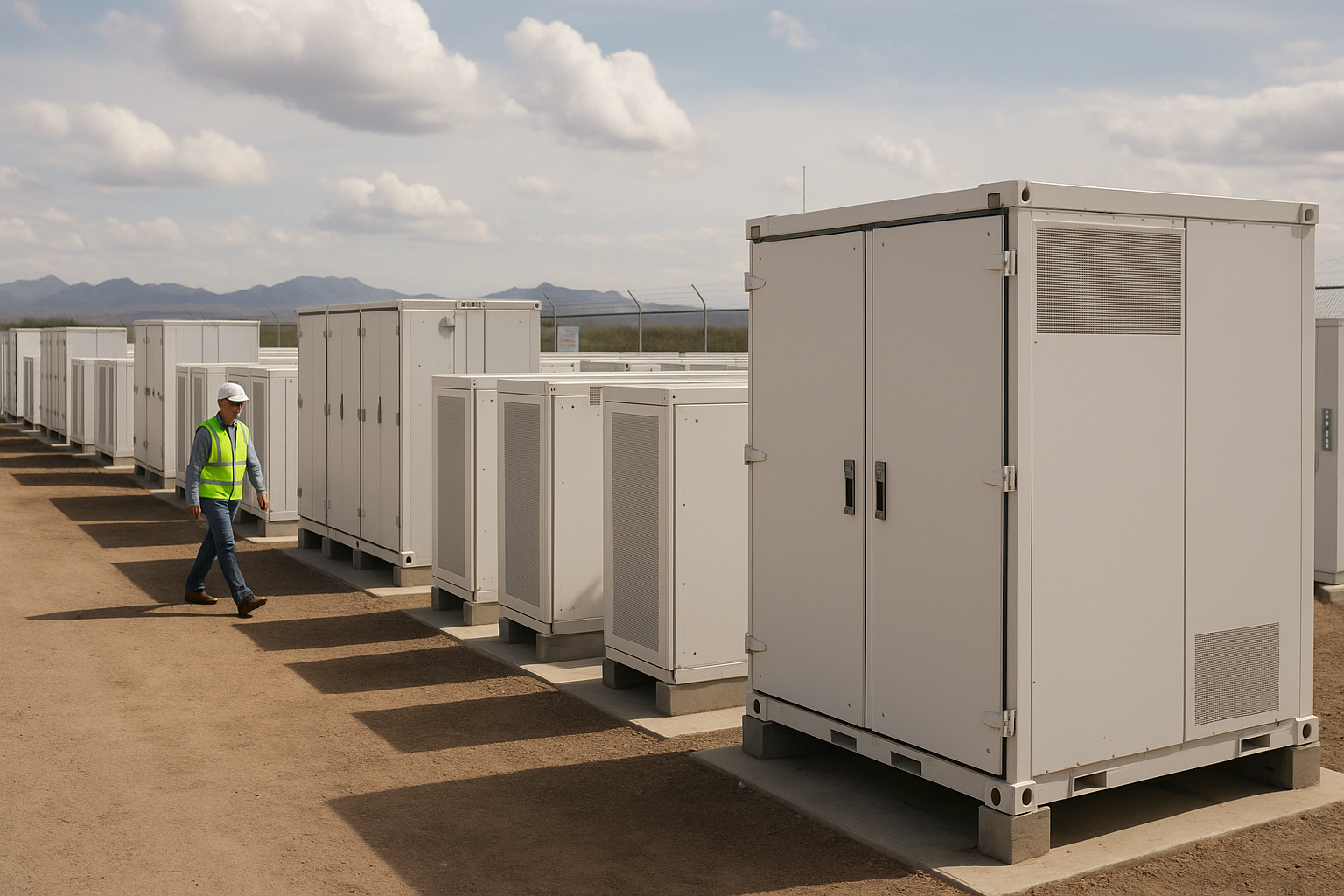
Arizona added more than 6.2 gigawatt-hours of battery electric storage capacity in the second quarter of 2026, making it the nation's growth leader and setting a record for the strongest single-state quarter ever recorded, according to the Q3 U.S. Energy Storage Market Outlook released by the Solar Energy Industries Association and Benchmark Mineral Intelligence.
The state overtook Texas for new capacity added during the first half of the year, capturing a 27% national market share in 2026. Arizona and Texas were two of only four states to deploy more than a gigawatt-hour of storage in the year's first half, alongside California and Utah.
Arizona now holds 26.5 gigawatt-hours of total BESS capacity, third in the nation behind California's 62 gigawatt-hours and Texas' 33.1. The average project size in Arizona is 489 megawatt-hours, larger than every state except Utah.
Two projects anchored Arizona's second-quarter performance: the TransGrid Atlas VII BESS and Recurrent Energy's Papago Storage facility in Tonopah, each adding 1,200 megawatt-hours and ranking among the nation's 10 largest installations. Separately, Project Sterling, described in the report as the largest solar battery project ever built in Arizona, is now underway in Mohave County, with 90% of its capacity presold to Tesla.
Nationally, utility-scale BESS capacity rose 23% year-over-year in the first half of 2026, driven largely by data center expansion. The report noted that demand for storage is exceeding prior forecasts, and that upcoming midterm elections could shift the policy balance between states supporting and restricting data center growth. Arizona itself saw one major data center project rejected by local authorities last week.
SEIA President and CEO Tim Pawlenty said in the report that the growth "highlights that storage is a powerful reliability tool that strengthens our energy security, meets rising demand and puts downward pressure on electricity bills."
The SEIA report forecasts Arizona will reach 73 gigawatt-hours of total capacity by 2030.
Sources
Every factual claim in this article traces to one of the sources below. See how we work for the editorial process.
- aztechcouncil.org retrieved 03/09/2026 20:46
Authored by The Scottsdale Signal. Drafted by AI from primary-source material under our beat-specific editorial guides; reviewed by humans before publish under our five-gate process. Sources retrieved at 03/09/2026 20:46. Every claim traces to a source.

