Highlights
- Arizona State University secured a $783,649 NSF CAREER award for evolutionary biology research running June 2026 through May 2031.
- PI Kerry Geiler-Samerotte will use yeast as a model organism to map how minor environmental changes redirect adaptive mutations.
- The grant includes a course-based undergraduate research program, with all data and tools to be shared publicly.
- ASU has produced more than 220 NSF CAREER award recipients, with five faculty earning the distinction in a single recent year totaling $2.8 million.
Arizona State University has secured a $783,649 federal research grant to investigate how minor shifts in environmental conditions can alter the course of evolution, work with downstream implications for drug-resistant pathogens, agricultural stability, and ecosystem resilience, according to the NSF award record.
Principal investigator Kerry Geiler-Samerotte will lead the project, titled "CAREER: Sensitivity of evolution to subtle environmental change," under the NSF's Evo Patterns & Processes program. The award period runs June 1, 2026 through May 31, 2031.
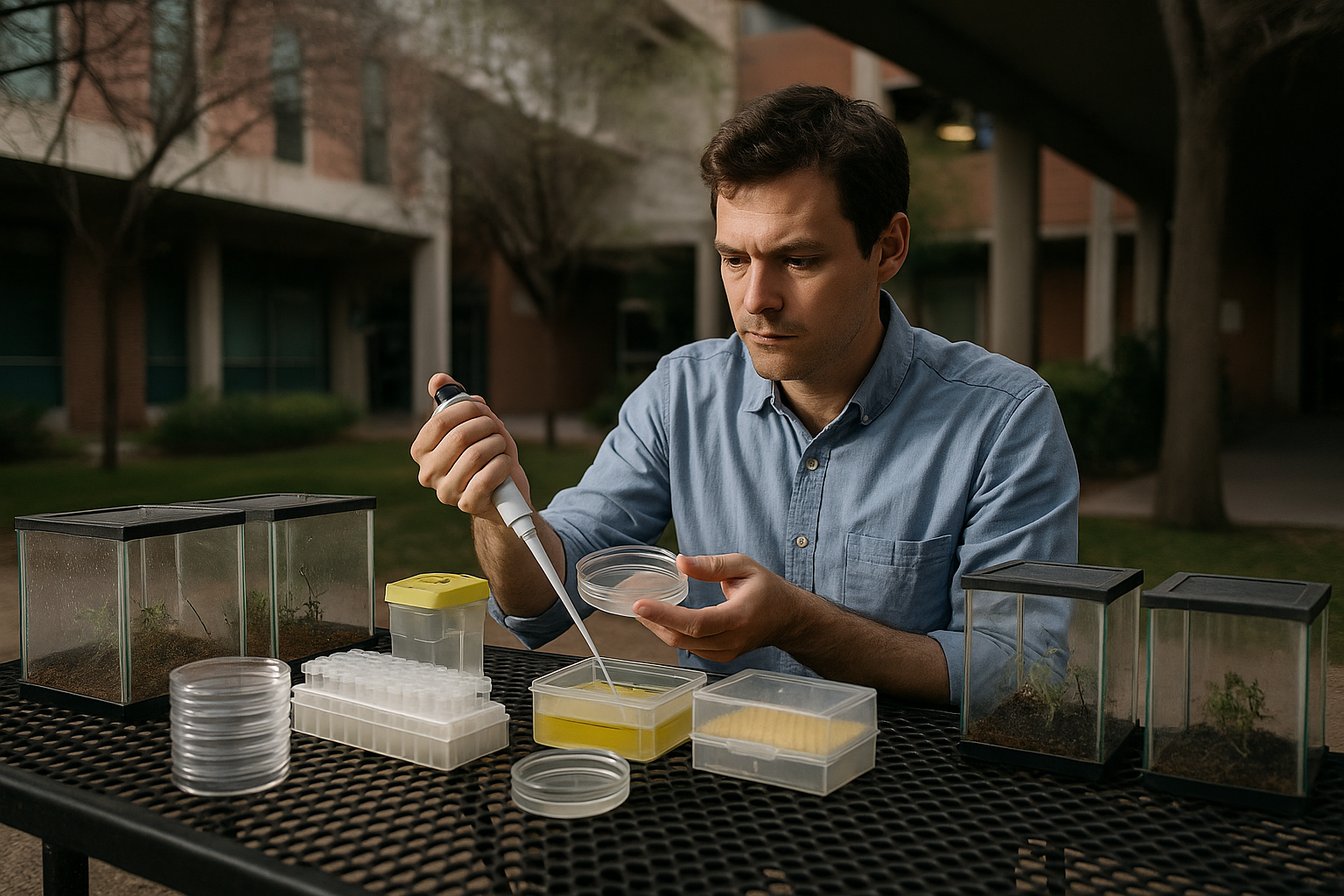
The research targets a gap in evolutionary biology: most experimental work focuses on extreme conditions, leaving the subtler environmental differences organisms encounter in nature largely unmapped. Geiler-Samerotte's lab will use massively parallel experimental evolution in the model eukaryote Saccharomyces cerevisiae, baker's yeast, to quantify how adaptive mutations respond to finely resolved environmental gradients, per the NSF abstract.
The practical stakes are concrete. Understanding how slight environmental differences redirect evolutionary outcomes could improve scientists' ability to anticipate how pathogens develop drug resistance or how agricultural species respond to incremental climate shifts, both areas with direct economic consequences.
Beyond the bench work, the grant funds a course-based undergraduate research experience, or CURE, designed to give students hands-on training in experimental evolution. All data and tools generated by the project will be shared openly, according to the award record.
The CAREER designation matters institutionally. The NSF CAREER program targets what the foundation describes as the nation's most promising young faculty for early-career development funding. ASU has now produced more than 220 professors who have received the distinction, a cohort that includes five faculty who earned awards in a single recent year, totaling $2.8 million across those grants.
The NSF lists the recipient organization as Arizona State University, Scottsdale, AZ, with award ID 2541235. The full award record is publicly searchable on the NSF AwardSearch database.
The grant period begins June 1, 2026.
Sources
Every factual claim in this article traces to one of the sources below. See how we work for the editorial process.
- nsf.gov retrieved 07/05/2026 18:13
- news.asu.edu retrieved 07/05/2026 18:13
Authored by The Scottsdale Signal. Drafted by AI from primary-source material under our beat-specific editorial guides; reviewed by humans before publish under our five-gate process. Sources retrieved at 07/05/2026 18:13. Every claim traces to a source.