Highlights
- AG Kris Mayes on Aug. 31 became the first statewide official to call for a moratorium on new Arizona data centers, citing water and electricity concerns.
- A Noble Predictive Insights poll found 57% of registered Arizona voters oppose new large-scale data center projects, with majorities across party lines.
- Gov. Katie Hobbs wants to permanently end data center tax incentives; Republican challenger Andy Biggs also supports repeal but opposes a moratorium.
- Arizona Corporation Commission candidates are split, with Republican Kevin Thompson backing growth and Democrats Clara Pratte and Jonathon Hill pledging strict water and energy rules.
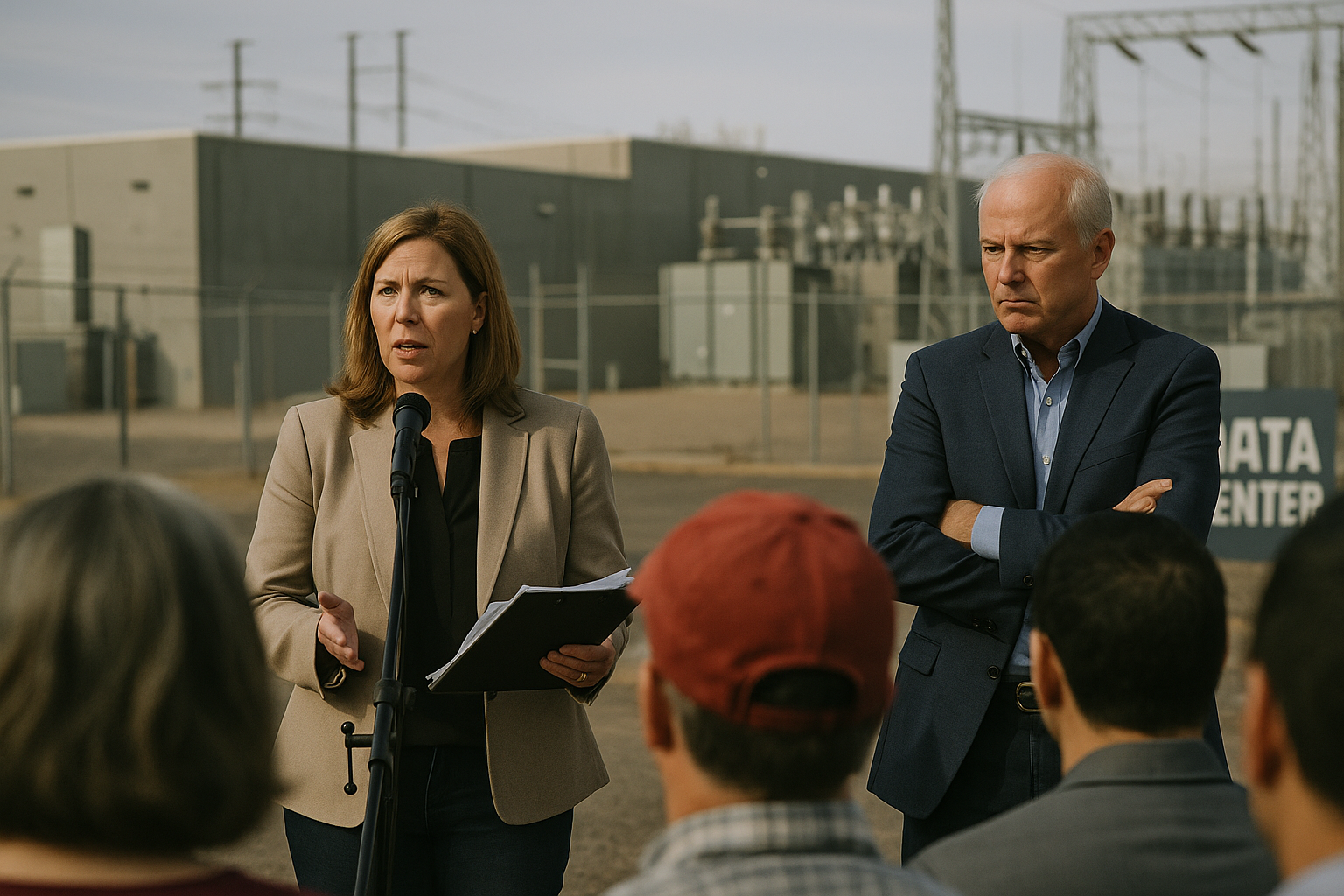
Arizona Attorney General Kris Mayes on Aug. 31 became the first statewide elected official to call for a moratorium on new data center approvals in Arizona, citing public concerns about water usage and electricity demand, and the move has scrambled the campaign calculus for candidates up and down the ballot ahead of November's midterms.
The political pressure has a polling foundation. A survey from Noble Predictive Insights found that 57% of registered Arizona voters oppose new, large-scale data center projects, with a majority across party lines supporting limits on development and pointing to water use, electricity demand, and infrastructure costs as their primary concerns. A separate report from the Governor's Office of Resiliency found that communities are "overwhelmed" by the volume and scale of proposed data center projects and flagged a disconnect between state-level energy policymaking and the realities facing local communities.
The Arizona Chamber of Commerce & Industry pushed back on Mayes' call with what it described as a challenge to data center opponents: stop using all cloud-based technology, from social media and teleconferencing to artificial intelligence platforms and online banking. Courtney Coolidge, the Chamber's executive vice president, said the exercise was not meant to dismiss concerns but to open a substantive policy conversation. "We wanted to make the point that everyone wants the benefits of the digital economy, but those benefits require infrastructure, and so that infrastructure needs real policy conversations," Coolidge said.
Cynthia Zwick, director of the Residential Utility Consumer Office, the state agency that represents residential utility customers, attributed the backlash to a failure of communication from developers, utilities, and elected officials rather than outright opposition to the technology itself.
On the Republican side, President Donald Trump posted on social media Aug. 31 that communities opposing data centers risk becoming "backwards and poor," and several Arizona candidates have aligned with that framing. Arizona Corporation Commission member Kevin Thompson, who regulates investor-owned electric companies and reviews electric service agreements with data center operators, has been an outspoken supporter of growth. Rep. Ralph Heap, running for the second open Commission seat, told the Arizona Capitol Times in May he would support data center expansion to advance the nation's AI position.
Democratic Commission candidates Clara Pratte and Jonathon Hill have stopped short of endorsing Mayes' moratorium but have pledged to demand strict rules to stop what they call reckless, AI-driven development from draining Arizona's water resources and shifting energy costs onto residential ratepayers.
Gov. Katie Hobbs has committed to permanently ending data center tax incentives if reelected, though she has not endorsed a development pause. Those incentives are currently suspended until 2029 under a budget provision Hobbs pushed during the legislative session. Her spokesman, Christian Slater, said the governor wants data centers to pay their fair share for water and to stop driving up utility bills. Republican challenger Andy Biggs has also pledged to repeal the tax incentives, but Noble Predictive Insights polling shows voters trust Hobbs more on the issue: 39% said she is best equipped to manage data center growth versus 30% for Biggs. Biggs' running mate, former Sen. Sine Kerr, told KTAR that the ticket would not support an outright moratorium and would prefer to leave that authority with local communities.
Coolidge said she does not expect Mayes' proposed moratorium to advance but anticipates more measured policy conversations once the election cycle ends and newly elected leaders convene at the Capitol.
Mayes has announced a town hall on the issue for October, according to her office's press release. The next major decision point for candidates will be the November general election.
Sources
Every factual claim in this article traces to one of the sources below. See how we work for the editorial process.
- azcapitoltimes.com retrieved 07/09/2026 12:16
Authored by The Scottsdale Signal. Drafted by AI from primary-source material under our beat-specific editorial guides; reviewed by humans before publish under our five-gate process. Sources retrieved at 07/09/2026 12:16. Every claim traces to a source.