Highlights
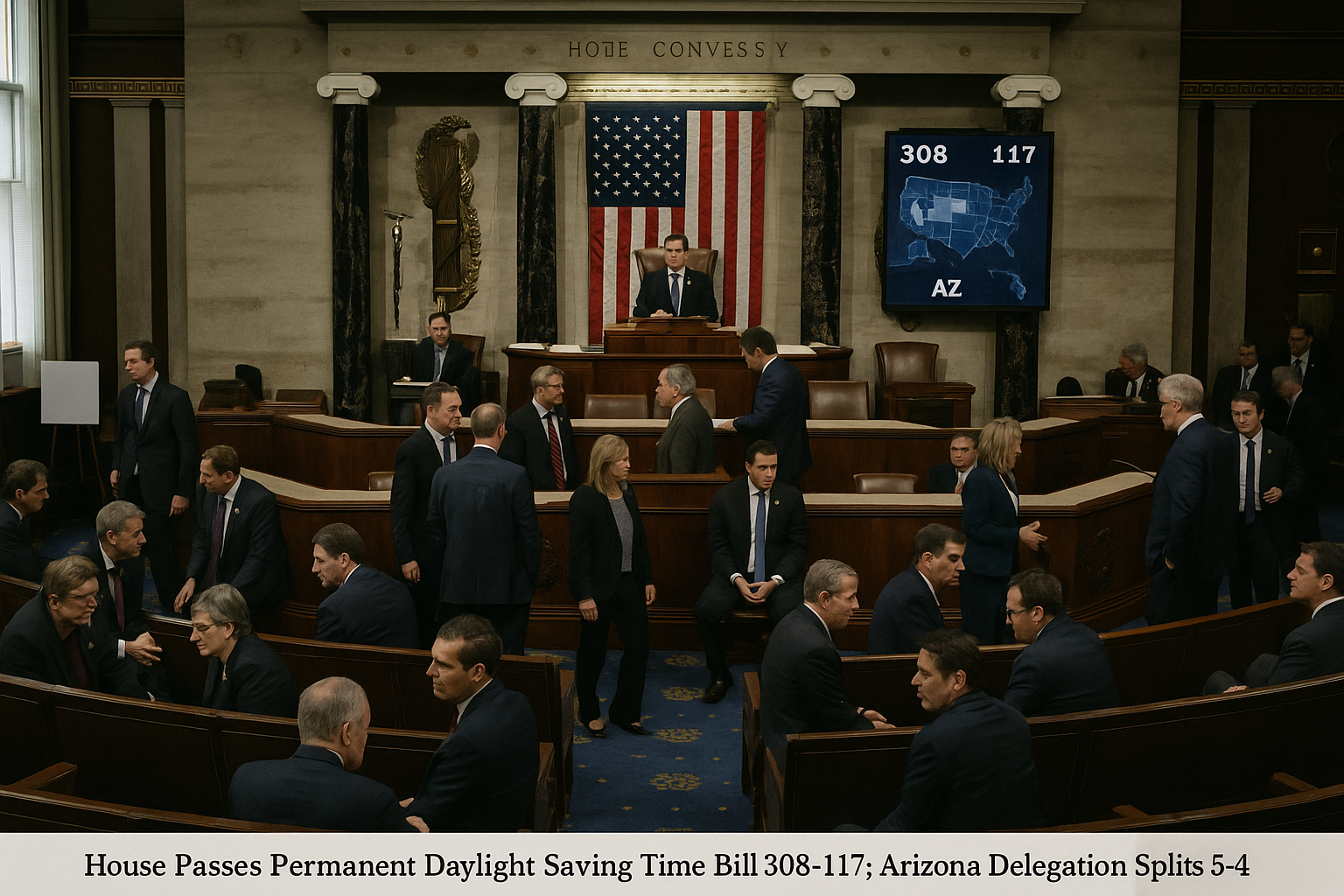
- The House passed the Sunshine Protection Act on July 14, 2026, with a 308-117 bipartisan vote to make daylight saving time permanent nationwide.
- Arizona's delegation voted 5-4 against the bill; Scottsdale's Rep. Abe Hamadeh was among the four who supported it.
- Arizona has observed year-round standard time since 1968 and could opt out of the new law if the Senate passes it.
- The bill now moves to the Senate, where passage would end the twice-yearly clock change for most Americans.
The House voted 308-117 Tuesday to make daylight saving time permanent across the country, a result that would leave Arizona, which has not changed its clocks since 1968, in the unusual position of being aligned with the rest of the nation for the first time in nearly six decades, at least during summer months.
The bill, the Sunshine Protection Act, passed on a bipartisan basis, according to Cronkite News reporter Kyle Sekenski. States could opt out and choose permanent standard time instead, a provision that would allow Arizona to maintain its current arrangement.
Arizona's nine-member delegation split 5-4 against the measure. All three Arizona Democrats opposed it: Reps. Greg Stanton and Yassamin Ansari of Phoenix and Adelita Grijalva of Tucson. GOP Reps. Paul Gosar of Bullhead City and Andy Biggs of Gilbert also voted no. Supporting the bill were Republican Reps. Abe Hamadeh of Scottsdale, David Schweikert of Fountain Hills, Juan Ciscomani of Tucson, and Eli Crane of Oro Valley.
Arizona has been on Mountain Standard Time since 1968, which is why Phoenix and Los Angeles share the same clock during summer. The state adopted the permanent standard time posture to reduce cooling costs and allow evening activities to start earlier during its hot summers. The Navajo Nation, which controls a large portion of northeastern Arizona, does observe daylight saving time.
President Donald Trump has publicly backed the measure. After a House committee approved the bill 48-1 in May, Trump wrote on Truth Social that ending the clock change would be a win and that the country would go "with the far more popular alternative, Saving Daylight, which gives you a longer, brighter Day."
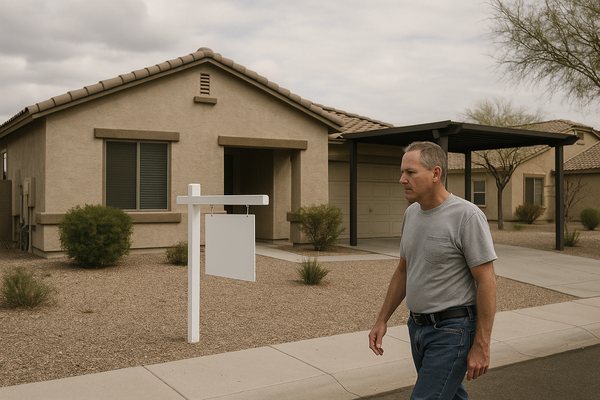
Why does this matter for Arizona property owners and businesses?
If the Senate passes the bill and Arizona opts out to remain on permanent standard time, the practical effect for Scottsdale residents and businesses is minimal, the state's clocks would not change. If Arizona were to align with the new federal standard, summer evenings would gain an additional hour of daylight, shifting the calculus for outdoor dining, golf tee times, and evening events at venues across the Valley.
The bill now goes to the Senate. No vote date has been announced.
Sources
Every factual claim in this article traces to one of the sources below. See how we work for the editorial process.
- Cronkite News retrieved 15/07/2026 00:52
Authored by The Scottsdale Signal. Drafted by AI from primary-source material under our beat-specific editorial guides; reviewed by humans before publish under our five-gate process. Sources retrieved at 15/07/2026 00:52. Every claim traces to a source.