


Highlights
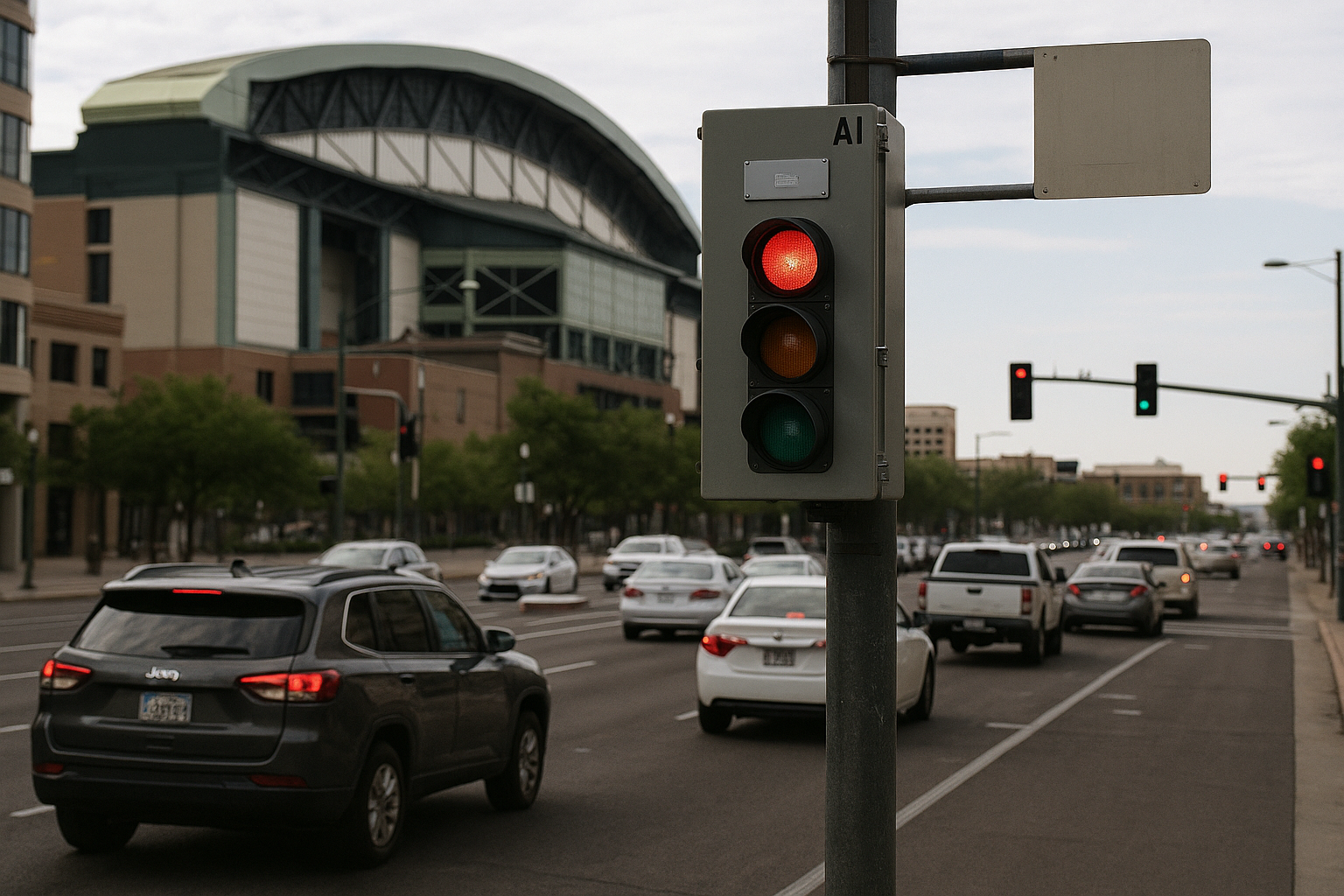
- Phoenix will install about 25 new AI-powered traffic signals downtown in the next few months, targeting event crowds at Chase Field and Mortgage Matchup Center.
- The signals, built on NoTraffic technology, adjust timing in real time rather than running preset schedules written by engineers.
- A NoTraffic case study reported a 29% cut in afternoon commute times and a 70% reduction in red-light running at equipped intersections.
- Phoenix is separately piloting a Google program that uses Maps data to recommend signal timing adjustments without new hardware.
<p>Phoenix is deploying roughly 25 new AI-powered traffic signals in its <a href="/entity/downtown/">downtown</a> core over the next few months, targeting the gridlock that spills out of Chase Field and Mortgage Matchup Center on game and concert nights, according to <a href="https://www.azfamily.com/2026/08/20/phoenix-turns-ai-fight-chase-field-game-day-gridlock/">Arizona's Family</a>.</p> <p>The signals, positioned between Interstates 17 and 10, use technology from <a href="https://www.notraffic.com/resources/phoenix-az-a-leap-forward-in-traffic-safety/">NoTraffic</a> to rewrite their own timing on the fly rather than running a schedule an engineer programmed, sometimes years ago. Simon Ramos, a traffic engineering supervisor for the city, said another 16 signals are planned near Loop 101 on the north side of town.</p> <p>Phoenix has been running AI signals since 2020 and now has roughly 50 to 60 intersections outfitted with the detection technology, Ramos said. The Federal Highway Administration puts the national share of adaptive signals at fewer than 1% of all U.S. traffic lights. Phoenix operates about 1,300 signals citywide with six traffic engineers managing timing across the network.</p> <p>NoTraffic published a case study last year reporting that its technology cut afternoon commute times by 29%, reduced red-light running at those intersections by 70%, cut pedestrian wait times by 17% and reduced carbon dioxide emissions by the equivalent of taking about 200 cars off the road each year. Ramos said the city does not rely solely on vendor data: "We work with all three state universities to vet and validate and evaluate these technologies," he said. "So it's not just the vendor touting these figures."</p> <p>The system detects cars, bicycles and pedestrians, counts vehicles, identifies traffic trends and alerts the city to congestion or crashes. Signals can now communicate with each other, so a cluster of vehicles leaving one intersection is announced to the next one down the road. NoTraffic staffs a virtual operations center that confirms a crash before notifying the city.</p> <p>Phoenix is also piloting a separate Google program that draws on Maps and probe-vehicle data to recommend timing adjustments on three or four arterial streets, producing a before-and-after report once the city implements changes, no new hardware required.</p> <p>The work began with a Maricopa Association of Governments pilot on Glendale Avenue between Central Avenue and State Route 51, later expanding to about 20 nearby intersections. A recently completed University of Arizona study used the technology at roughly 30 more intersections to examine yellow light timing.</p> <p>Ramos said the longer-term trajectory of the program may depend on how connected-vehicle technology develops; Phoenix is already testing equipment that lets fire trucks communicate with roadside units at intersections. The next downtown signals are expected online within the next few months.</p>
Sources
Every factual claim in this article traces to one of the sources below. See how we work for the editorial process.
- AZ Family (3TV/CBS5) retrieved 20/08/2026 02:25
Authored by The Scottsdale Signal. Drafted by AI from primary-source material under our beat-specific editorial guides; reviewed by humans before publish under our five-gate process. Sources retrieved at 20/08/2026 02:25. Every claim traces to a source.

