Highlights
- The Arizona House gave preliminary approval to SB 1624, which caps photo radar fines at $75, well below the current $250 maximum.
- Paradise Valley charges the highest photo radar fine in Maricopa County at $243; Chandler, Mesa, Paradise Valley, Phoenix and Tempe all oppose the bill.
- A League of Arizona Cities and Towns lobbyist testified the fine reduction should wait until voters decide in November whether to keep traffic cameras at all.
- Gov. Katie Hobbs is unlikely to sign the bill; it still needs a final House vote and Senate concurrence on amendments.
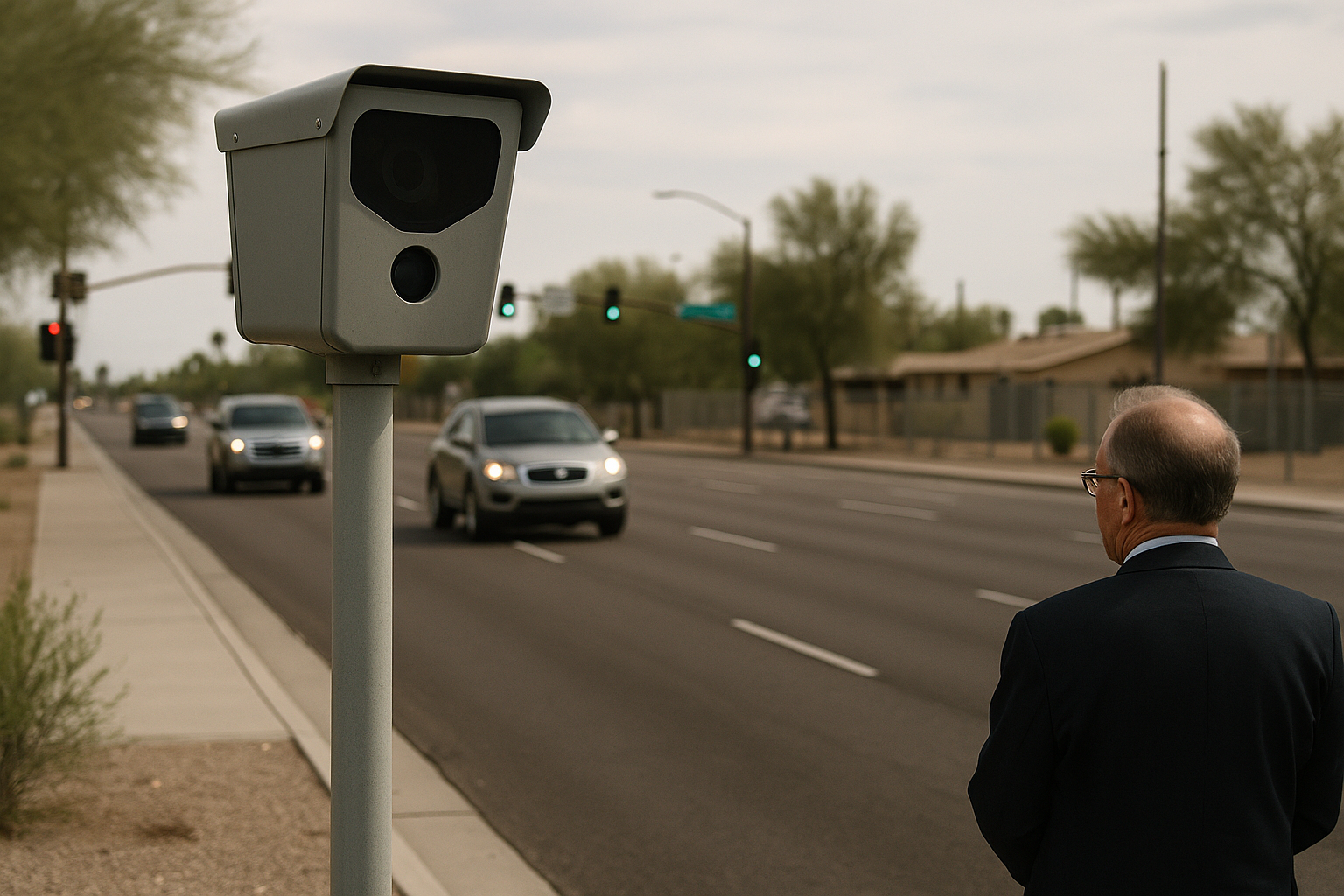
A bill that would cut the cost of photo radar tickets by more than a third cleared an initial House vote Wednesday, drawing opposition from five Maricopa County cities that say the reduced fine would eliminate the only real incentive for drivers to slow down.
Senate Bill 1624 would cap fines from speed and red-light cameras at $75, far below the current maximum of $250. Chandler, Mesa, Paradise Valley, Phoenix and Tempe, all of which operate photo radar systems, are on record against the legislation. Paradise Valley currently charges the highest fine in Maricopa County at $243, according to testimony from Doug Cole, a lobbyist for the League of Arizona Cities and Towns, at a March 18 House Transportation and Infrastructure Committee hearing.
Cole told lawmakers the ticketing system was never designed as a revenue source. "We don't want those seventy five dollars," he said. "We want behavior changed for things to be safer."
Cole also argued the fine reduction should be tabled until after voters weigh in on a separate, related question: a companion measure would ask Arizonans in November whether city officials need voter approval every 10 years to keep traffic cameras operating. Supporters of SB 1624 are pressing ahead regardless, treating the fine cap as a way to chip away at camera enforcement even if voters choose to preserve the systems.
The bill carries additional provisions that expand its reach beyond ticket costs. It would bar the Arizona Department of Transportation and its Motor Vehicle Division from counting photo radar tickets when evaluating whether to suspend or revoke a license. Insurance companies, including Allstate, Progressive and Nationwide, would be prohibited from using photo radar data to raise rates or make coverage decisions, and all three carriers have registered opposition to the legislation.
Republicans framed the lower fine as a practical fix. Sen. David Gowan, who represents Sierra Vista, argued during March Senate debate that a cheaper ticket would persuade more drivers to pay promptly rather than wait to be formally served, since Arizona law does not require a response to a mailed photo radar notice. Rep. Patty Contreras, D-Tempe, countered during the March 18 committee hearing that $75 is too small a sum to change behavior, paraphrasing the concern that for higher-income drivers the amount amounts to little more than a nuisance fee.
The bill passed the Senate 25-2 with bipartisan support before House Democrats began raising objections. It still needs a final House floor vote and must return to the Senate for concurrence on amendments before reaching Gov. Katie Hobbs, who has previously rejected efforts to regulate photo radar systems and is not expected to sign it.
A final House vote has not been scheduled.
Sources
Every factual claim in this article traces to one of the sources below. See how we work for the editorial process.
- azmirror.com retrieved 11/06/2026 00:48
Authored by The Scottsdale Signal. Drafted by AI from primary-source material under our beat-specific editorial guides; reviewed by humans before publish under our five-gate process. Sources retrieved at 11/06/2026 00:48. Every claim traces to a source.