Highlights
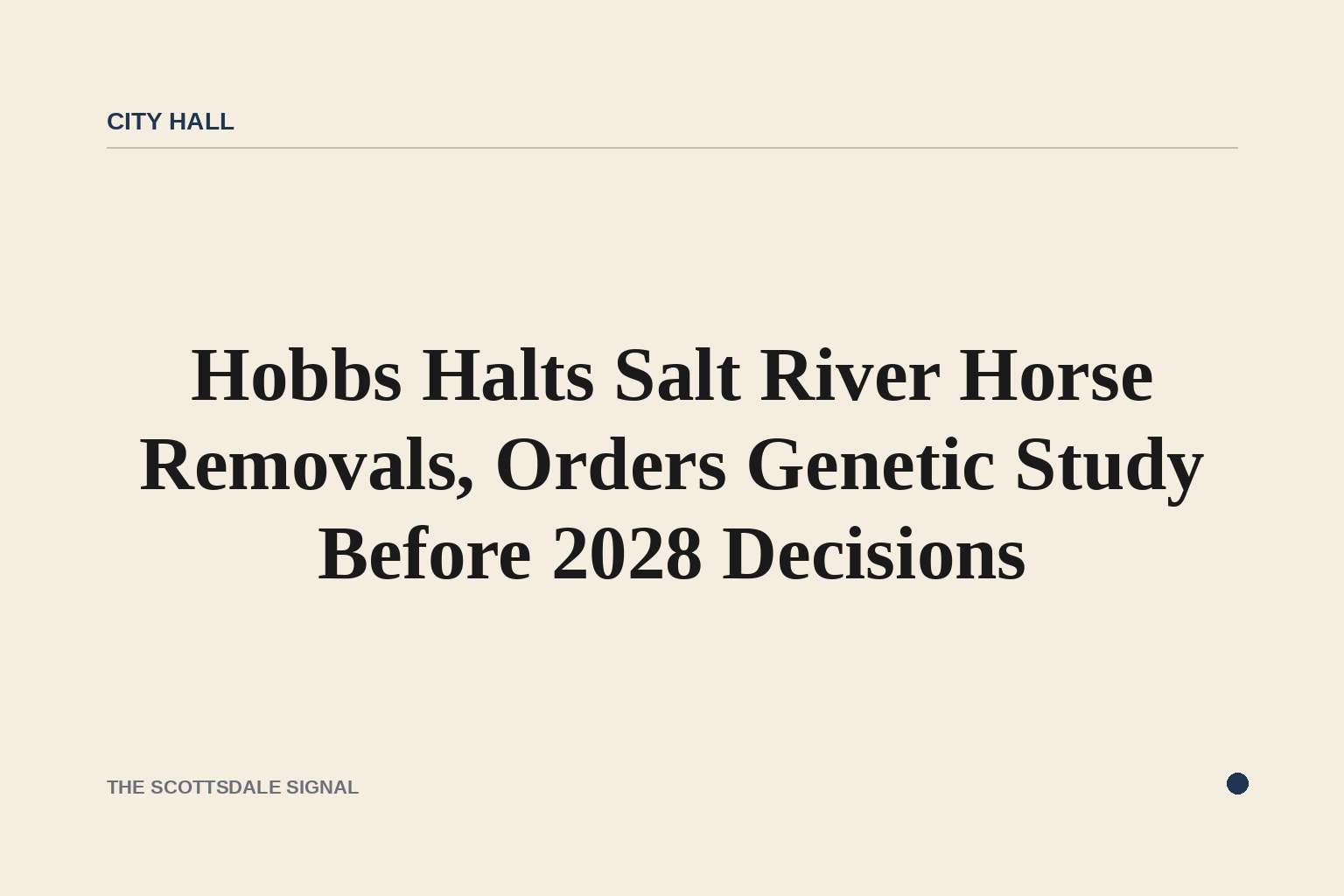
- Gov. Katie Hobbs halted the planned September removal of 25 Salt River horses and ordered a genetic viability study of the herd.
- The amended management plan raises the target herd population from about 120 to about 170 horses and suspends removals through 2027.
- Rep. Cody Reim, whose district includes the Salt River area, says Hobbs had authority to act in April and May but waited until August.
- The Arizona Board of Regents is expected to vote Aug. 27 on funding for the study, which Arizona's public universities would conduct.
Just weeks before 25 Salt River horses were set to be removed, Gov. Katie Hobbs halted the removals and ordered a genetic viability study of the herd, according to the Arizona Capitol Times.
The Arizona Department of Agriculture amended the Salt River Horse Herd Management Plan to pause all removals through 2027, giving researchers time to complete the study and allowing its findings to inform future management decisions. The amended plan also raises the herd's target population to about 170 horses; the Salt River Wild Horse Management Group estimates the current herd at about 267 horses. The original February agreement between the Department of Agriculture and the management group had set a target of reducing the herd to about 120 horses over five years.
Hobbs said she worked with the Arizona Board of Regents to identify funding for the genetic viability study. Arizona's public universities would conduct the study, and it would be independently reviewed before release. The Board of Regents is expected to vote on it Aug. 27.
Simone Netherlands, president of the Salt River Wild Horse Management Group, called the decision a victory more than a decade in the making. "We are thrilled with the Governor's actions because, from the very beginning, more than a decade ago, it has always been our mission to preserve these cherished and historic wild horses for future generations of Arizonans to enjoy," she said.
Republican Rep. Cody Reim, whose district includes the Salt River area, was more pointed. He said advocates had been pressing the governor since spring. "Her administration had the authority to stop these removals months ago. She waited until August to do what we were asking her to do in April and May," Reim said in a statement. He also questioned whether the plan provides enough accountability, noting it does not specify whether genetic measures such as effective population size, allelic diversity, and inbreeding coefficients will be required, standards his proposed strike-everything amendment to Senate Bill 1199 would have codified in law.
"Governor Hobbs can change a management plan today, and it can be changed again tomorrow," Reim said.
John Koleszar, representing the nonprofit Arizona Sportsmen for Wildlife Conservation, said his organization, which represents 33 outdoor recreation communities, respectfully disagrees with the governor's decision. He said he anticipates the genetics study will show removal is still necessary given existing inbreeding levels.
The pause allows population targets for 2028 through 2030 to be reconsidered after the study is complete. The Board of Regents vote is scheduled for Aug. 27.
Where to find them
- River Wild Horse Management Group · saltriverwildhorsemanagementgroup.org
Sources
Every factual claim in this article traces to one of the sources below. See how we work for the editorial process.
- azcapitoltimes.com retrieved 23/08/2026 12:09
- River Wild Horse Management Group (official site) retrieved 23/08/2026 12:09
Authored by The Scottsdale Signal. Drafted by AI from primary-source material under our beat-specific editorial guides; reviewed by humans before publish under our five-gate process. Sources retrieved at 23/08/2026 12:09. Every claim traces to a source.