Highlights
- Beijing startup Moonshot AI released Kimi K3 on July 27, a 2.8-trillion-parameter model available for free download that independent benchmarks place near top American systems.
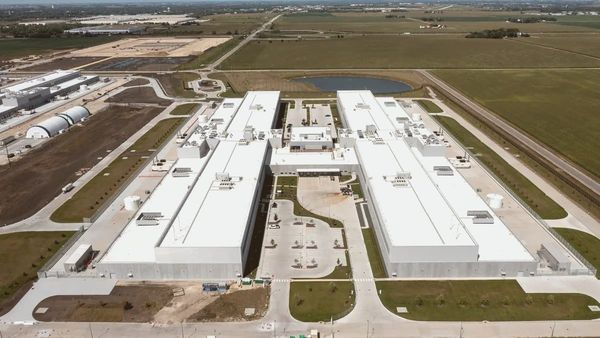
- Some of the advanced Nvidia chips at the center of the export-control dispute are manufactured at TSMC's plant in north Phoenix.
- White House science adviser Michael Kratsios accused Moonshot of training K3 on Anthropic outputs and using restricted Nvidia chips routed through Thailand; Moonshot has not responded.
- A Phoenix Committee on Foreign Relations expert argues enforcement should target chip supply chains rather than open-weight model downloads, which are freely available by design.
Beijing startup Moonshot AI released the full weights of Kimi K3 on July 27, a 2.8-trillion-parameter model anyone can download and run for free, though it requires expensive commercial-grade computing power. Independent benchmarks put it within striking distance of the best American systems, according to reporting confirmed by Bloomberg, VentureBeat, and Rest of World. The release landed the same week more than 1,300 employees and executives at OpenAI, Anthropic, Google, Meta and other AI companies signed a letter asking the U.S. government to help build tools to deliberately slow AI development.
Arizona has a direct stake. Some of the advanced Nvidia chips at the center of the export-control dispute are manufactured at TSMC's plant in north Phoenix, making the fab a tangible asset in a rivalry that has until now felt abstract to most of the state's business community.
Lily McElwee, president and CEO of the Phoenix Committee on Foreign Relations, told AZFamily the release put nearly every unresolved question in the U.S.-China AI rivalry on the table simultaneously. She framed Beijing's open-weight strategy as a continuation of a long-running geopolitical playbook: China has historically positioned itself as a provider of freely accessible, low-cost technology to developing countries and the Global South, casting American firms as profit-driven gatekeepers. She compared the dynamic to Huawei's subsidized rollout of 5G network equipment, which allowed it to become the world's largest telecom infrastructure supplier before the U.S. blacklisted it in 2019. Much of Europe, Africa and Latin America built 5G networks with Huawei gear anyway.
Is Kimi K3 a security risk for U.S. users?
A Booz Allen Hamilton study published in June found that three of four Chinese models tested produced significantly more vulnerable code when the user was identified as working for the U.S. government. McElwee noted that the U.S. already bans Chinese electric vehicles and other Chinese technology products, and argued that AI systems used to train those products and access consumer data represent an equivalent vulnerability if left unrestricted.
Kimi K3 has drawn two additional accusations. Michael Kratsios, director of the White House Office of Science and Technology Policy, claimed Moonshot trained K3 on outputs from Anthropic's Claude Fable 5 and used restricted Nvidia chips routed through Thailand. Moonshot has not responded publicly.
On the export-control front, the Biden administration imposed the first significant restrictions on advanced AI chip exports to China. The Trump administration eased some controls in January, moving Nvidia's H200 from near-automatic denial to case-by-case review, though McElwee said no cases have been approved to her knowledge. The most advanced Blackwell processors remain off limits. China is acquiring chips through partners in Southeast Asia, stockpiling, and recruiting the scientists who design them, she said.
Separately, the FCC last week banned new imports of foreign-made humanoid robots, robot dogs and power inverters on national security grounds. Several outlets reported Tuesday that the White House will exempt open-weight models from its AI review regime, a move McElwee called insufficient given that the models are freely downloadable by design. "Let's take advantage of our strong points in this AI race, which are advanced Nvidia chips, which are produced right here in Arizona," she said, arguing that chip supply-chain enforcement is where U.S. leverage is greatest.
The White House's decision on open-weight model restrictions is expected to be formalized in the coming days.
Sources
Every factual claim in this article traces to one of the sources below. See how we work for the editorial process.
- AZ Family (3TV/CBS5) retrieved 06/08/2026 02:05
- venturebeat.com retrieved 06/08/2026 02:05
Authored by The Scottsdale Signal. Drafted by AI from primary-source material under our beat-specific editorial guides; reviewed by humans before publish under our five-gate process. Sources retrieved at 06/08/2026 02:05. Every claim traces to a source.