Highlights
- Sen. Jake Hoffman filed a federal lawsuit to quash a subpoena issued to his firm 1Ten LLC as part of a Clean Elections probe into client Ralph Heap's campaign sign spending.
- Commission records show invoices for 184 Heap campaign signs were addressed to 'Jake Hoffman / 1ten.io,' with one reflecting a $96,500 payment.
- The commission argues federal court is the wrong venue and that Hoffman's First Amendment theory would let any publicly funded candidate hide spending by routing it through a consultant.
- The subpoena cannot be enforced without a Maricopa County Superior Court order, which has not been sought.
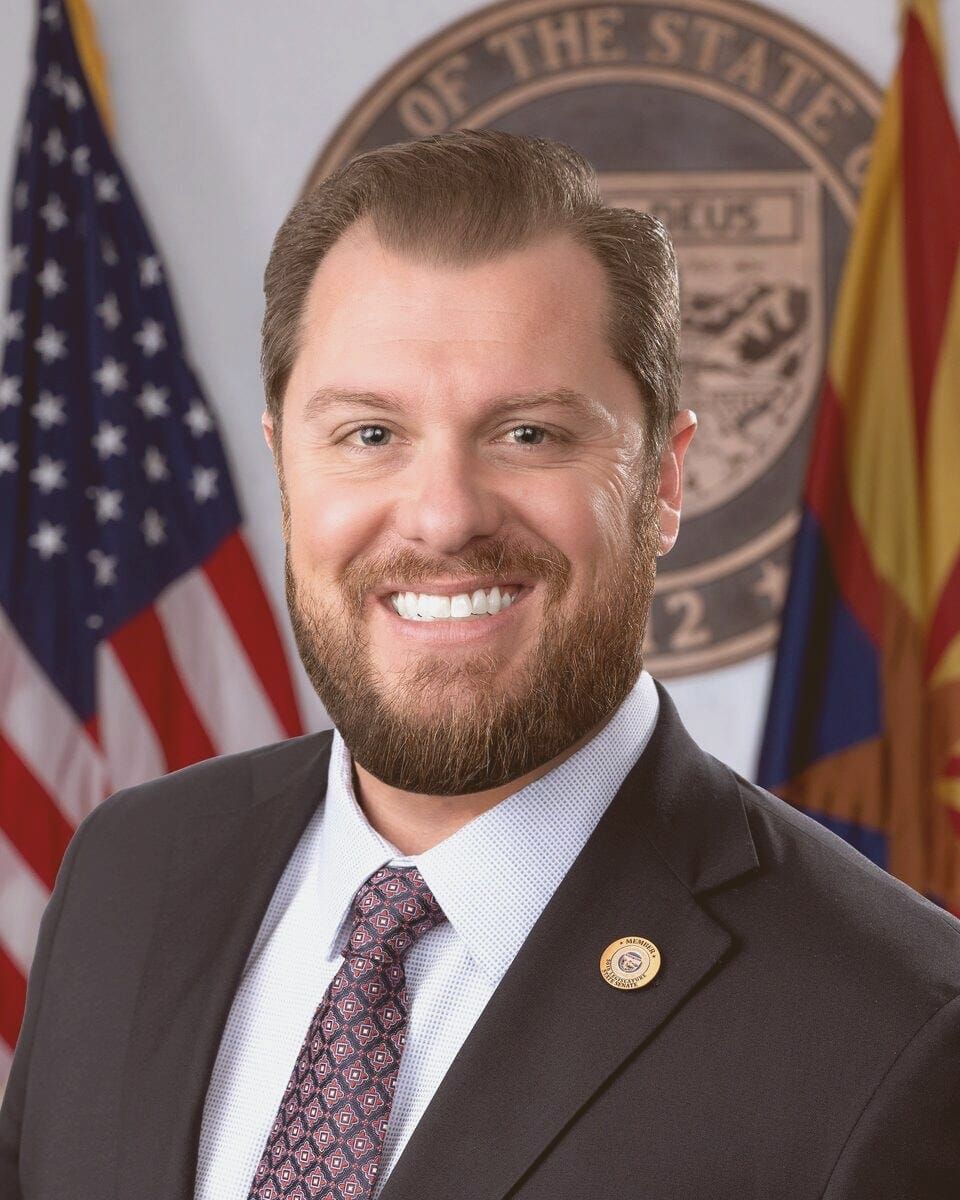
Republican state Sen. Jake Hoffman has asked a federal judge to quash a Citizens Clean Elections Commission subpoena issued to his political consulting company, 1Ten LLC, arguing the demand unconstitutionally exposes the private political relationships of his clients and staff.
The subpoena is part of a commission investigation into Ralph Heap, a Republican candidate for Arizona Corporation Commission who lost his race earlier this month after voluntarily enrolling in the state's public campaign finance program. Candidates who participate in Clean Elections accept a fixed amount of public funding in exchange for forgoing large donations and PAC money. Arizona voters created the program and the commission that oversees it when they passed the Clean Elections Act in 1998.
The commission opened its investigation into Heap in the summer after a voter filed a complaint alleging he failed to report spending on campaign signs before the July primary, even though signs for his campaign appeared across the Valley. Heap's attorney told the commission that Mesa Sign Shop had extended Heap a personal line of credit for the signs, and the shop's owner confirmed that account. On Aug. 27, the commission found reason to believe Heap had violated campaign finance laws and Clean Elections rules requiring him to report loans such as the one from the sign shop. Heap sought to withdraw from the program after the investigation began, but the commission denied that request.
The commission's attorney, Craig Morgan, identified a central factual problem for Hoffman's position: invoices for the signs are addressed not to Heap but to "Jake Hoffman / 1ten.io," and one invoice reflects a $96,500 payment. Heap, by contrast, reported only a single $644.47 payment to Mesa Sign Shop, while the complaint documented 184 signs deployed across the state.
"The First Amendment does not give a paid consultant the power to hide how a publicly funded campaign was paid for," Morgan wrote in the commission's response, arguing that endorsing Hoffman's theory would hand every publicly funded candidate a roadmap for evading the act by routing expenditures through a consultant and then seeking refuge in federal court.
Hoffman and 1Ten are represented by Scottsdale Republican state Rep. Alexander Kolodin, who ran unsuccessfully for Secretary of State this year. Kolodin argued in the lawsuit that the subpoena is overly broad and chills First Amendment rights by demanding records that reveal who picked up signs, how many were placed and when, and payments to anyone involved in distributing them. He also submitted more than 200 pages of social media screenshots from Hoffman's critics, including those who filed the initial complaint, alongside a declaration from James Rogers, a Republican candidate who lost his race this year, stating that the subpoena made him less willing to communicate candidly with 1Ten.
The commission pushed back on both pieces of evidence. Morgan wrote that the subpoena asks for nothing from Rogers and that his only connection to it is a shared invoice that also lists signs for Heap, which Mesa Sign Shop had already produced. The social media posts, Morgan argued, largely predate the subpoena and fail to show that anyone suffered reprisal from anything obtained in the investigation.
The commission also raised a threshold procedural objection: Arizona law requires challenges to commission subpoenas to be filed in Maricopa County Superior Court, not federal court. And the subpoena cannot be enforced without a Superior Court order, which the commission has not sought. Morgan wrote that no document will leave 1Ten's files until a state court orders production and that there is no imminent harm to support federal intervention.
The commission further argued that Hoffman's 14th Amendment claim fails because the Clean Elections Act expressly allows a subpoena recipient to move to quash or modify the demand through the act's own procedures, a process 1Ten never invoked before filing in federal court.
Who is Alexander Kolodin?
Kolodin is a Scottsdale Republican state representative who ran unsuccessfully for Arizona Secretary of State this year. He has been sanctioned for making evidence-free claims in election litigation, including his role in the so-called "kraken" lawsuit filed after the 2020 election, which the same federal judge now assigned to the 1Ten subpoena case deemed "sorely wanting of relevant or reliable evidence."
Hoffman's political consulting history extends beyond 1Ten. His separate company, Rally Forge, drew national attention for creating networks of Facebook accounts that appeared to be operated by Democrats but pushed conservative messaging ahead of the 2018 midterms, work conducted alongside Turning Point USA. The Washington Post reported that a majority of those accounts were run by teenagers. Facebook permanently banned Hoffman and Rally Forge over the accounts; Twitter did the same, though Hoffman's Twitter account was restored after Elon Musk acquired the platform.
The federal court has not yet ruled on Hoffman's motion. A ruling against the commission's venue argument would move the dispute to the merits of the First Amendment claims; a ruling in the commission's favor would send Hoffman to Maricopa County Superior Court to restart the challenge there.
Sources
Every factual claim in this article traces to one of the sources below. See how we work for the editorial process.
- azmirror.com retrieved 25/11/2026 21:45
Authored by The Scottsdale Signal. Drafted by AI from primary-source material under our beat-specific editorial guides; reviewed by humans before publish under our five-gate process. Sources retrieved at 25/11/2026 21:45. Every claim traces to a source.