Highlights
- The U.S. Supreme Court on Tuesday rejected an appeal to overturn $122,000 in sanctions against lawyers who represented Kari Lake in a 2022 election lawsuit.
- The underlying suit, filed by Lake and Mark Finchem against Maricopa and Pima county boards of supervisors, was dismissed as 'conjectural' and 'frivolous' by the trial court.
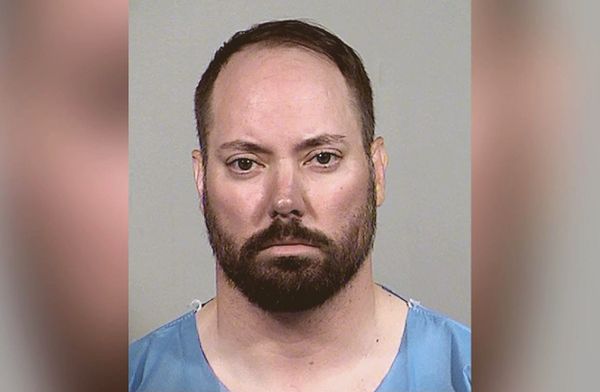
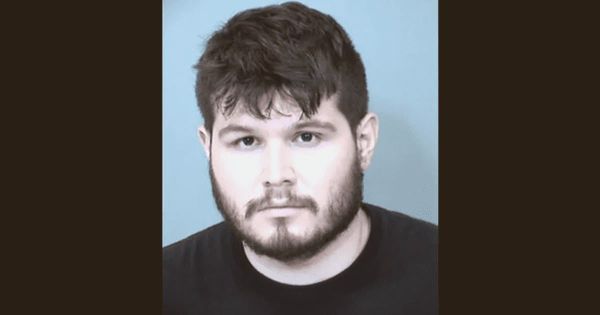
- Minnesota attorney Andrew Parker was the sole petitioner; co-counsel Kurt Olsen did not join the appeal, and Alan Dershowitz's sanctions were previously dismissed by the 9th Circuit.
- Parker's attorney had argued the sanctions would chill lawyers from bringing novel legal theories; Maricopa County's attorneys countered the penalties were the natural result of filing without evidence.
The U.S. Supreme Court on Tuesday declined to hear an appeal from attorney Andrew Parker, leaving in place $122,000 in court-ordered sanctions against lawyers who represented failed gubernatorial candidate Kari Lake in a 2022 lawsuit that sought to block Arizona counties from using electronic tabulators to count votes.
The high court released its list of accepted and declined cases without explanation for the Parker petition's rejection, per the Arizona Mirror's reporting. The appeal was Parker's last avenue to avoid paying the penalties.
The original lawsuit was filed in 2022 by Lake and then-Secretary of State candidate Mark Finchem against the Maricopa and Pima county boards of supervisors. The legal team, which included Parker, Washington, D.C., employment attorney Kurt Olsen, and celebrity attorney Alan Dershowitz, argued that Arizona's voting machines were susceptible to hacking and asked federal courts to block their use in the midterm elections, despite Arizona law requiring tabulators. A trial court judge dismissed the allegations as "conjectural" and "frivolous" and imposed the sanctions on the attorneys.
In his sanctions order, Judge John Tuchi wrote that penalizing the lawyers was aimed at deterring future conduct, not at relieving Lake and Finchem of accountability. "To sanction Plaintiffs' counsel here is not to let Plaintiffs off the hook," Tuchi wrote. "It is to penalize specific attorney conduct with the broader goal of deterring similarly baseless filing initiated by anyone, whether an attorney or not."
The 9th U.S. Circuit Court of Appeals upheld that ruling a year later, though Dershowitz's portion of the sanctions was dismissed because his participation in the case was limited. Olsen did not join Parker's Supreme Court petition.
Parker's appellate attorney, Nathan Lewin, argued in the petition that the sanctions would deter lawyers from advancing creative or novel legal theories. Attorneys for the Maricopa County supervisors pushed back, arguing in their response that the lawyers were not penalized for filing a difficult case but because their filings rested on speculation rather than evidence.
Separately, Olsen and Parker faced ethics complaints in 2024 stemming from the tabulator lawsuit, but a disciplinary panel dismissed those complaints.
With the Supreme Court's denial, Parker has no remaining appellate options; the $122,000 sanctions are final.
Sources
Every factual claim in this article traces to one of the sources below. See how we work for the editorial process.
- azmirror.com retrieved 13/10/2026 22:04
Authored by The Scottsdale Signal. Drafted by AI from primary-source material under our beat-specific editorial guides; reviewed by humans before publish under our five-gate process. Sources retrieved at 13/10/2026 22:04. Every claim traces to a source.