Highlights
- Attorneys for children abused by Paul Adams filed a motion asking the Arizona Supreme Court to reconsider its unanimous July ruling protecting clergy from mandatory abuse reporting.
- The court held that churches, not juries, decide what qualifies as a confidential communication, and that the First Amendment bars judicial review of that determination.
- Flagstaff attorney John Trebon argues the ruling creates an incentive for religious organizations to conceal child sexual abuse under the banner of religious freedom.
- Adams' confession was heard by at least 35 people and the abuse continued for seven more years before a 2017 international law enforcement investigation ended it.
Attorneys representing the children of Paul Adams, a former U.S. Customs and Border Patrol officer who sexually abused all six of his children for years, filed a motion this week asking the Arizona Supreme Court to reconsider its unanimous ruling last month that shielded Church of Jesus Christ of Latter-day Saints leaders from any duty to report the abuse to authorities.
The July ruling, reported by the Arizona Mirror and confirmed by KJZZ and azfamily.com, held that whether a clergy member's communication qualifies as a confidential confession is a determination left entirely to the church, and that the First Amendment bars courts from second-guessing that judgment. The justices also declared that any legislative effort to force clergy to report abuse would face constitutional barriers under the same reasoning.
In 2010, Adams confessed to his bishop, John Herrod, that he had been sexually abusing his children. Herrod called a church abuse help line, which advised him not to contact authorities. Adams later repeated the confession before a church disciplinary board and in front of his wife, Leizza. Herrod also informed the U.S. Department of Homeland Security that Adams, a federal employee, had confessed to the abuse. The church excommunicated Adams, but the abuse continued. It was not stopped until 2017, when law enforcement in New Zealand identified a video of the abuse online. The National Center for Missing and Exploited Children documented more than 9,000 files of child sexual abuse material connected to the case, according to the attorneys' filing.
Three of Adams' children sued the church in 2021. A Cochise County Superior Court judge granted summary judgment for the church. An appellate panel reversed, ruling that Adams' clergy-penitent privilege had been waived when the confession was repeated before multiple people, and that a jury should decide whether the church followed its own internal handbook on reporting. The Arizona Supreme Court overturned the appellate panel, concluding that the clergy-penitent privilege is a testimonial privilege unrelated to the duty to report, and that the reporting exemption is governed solely by the church's own characterization of what its doctrine requires.
Flagstaff attorney John Trebon, writing on behalf of the victims, argues the court handed religious organizations a tool to insulate themselves from civil liability whenever abuse is disclosed internally. "It is a dangerous 'public policy' to allow and encourage powerful religious organizations to unilaterally declare that all concealed child sexual abuse is privileged and 'confidential' retroactively," Trebon wrote in the motion. The filing contends there is no other known case in the United States in which a court has found that a neutral child abuse reporting statute violates the First Amendment.
Trebon's motion also presses a factual argument the court did not resolve: that Adams' confession was heard by at least 35 people and repeated in circumstances no reasonable person would regard as confidential, including a meeting at which Herrod told Leizza Adams she should report the abuse to police. The attorneys argue the court's opinion relied on a skewed reading of Arizona's mandatory reporting law and that the exemption and the privilege the court treated as distinct are, in their operative elements, essentially identical.
In Arizona, clergy are not mandated reporters, and the state's reporting statute contains an exemption for abuse learned through confession or confidential communication. The Supreme Court's ruling makes clear that whether that exemption applies is a question for the church alone.
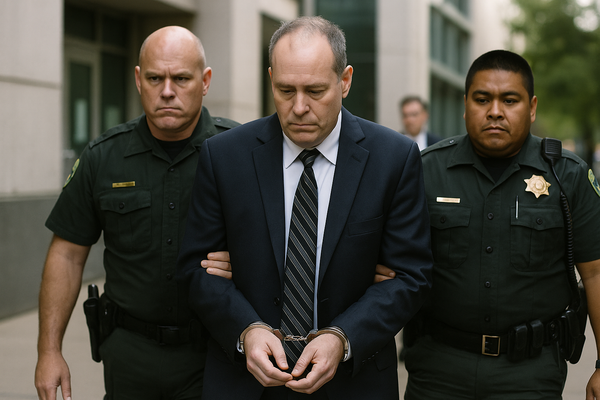
Adams was arrested in 2017 after posting videos of the abuse online. He died by suicide while in custody after confessing to law enforcement. The case, Doe v. The Corporation of the President of The Church of Jesus Christ of Latter-day Saints, drew national attention after an Associated Press investigation found the church's abuse help line routinely directed those reporting abuse toward church attorneys rather than civil authorities.
The Arizona Supreme Court has not yet indicated whether it will grant reconsideration.
Sources
Every factual claim in this article traces to one of the sources below. See how we work for the editorial process.
- azmirror.com retrieved 14/08/2026 23:45
- kjzz.org retrieved 14/08/2026 23:45
- AZ Family (3TV/CBS5) retrieved 14/08/2026 23:45
Authored by The Scottsdale Signal. Drafted by AI from primary-source material under our beat-specific editorial guides; reviewed by humans before publish under our five-gate process. Sources retrieved at 14/08/2026 23:45. Every claim traces to a source.