Highlights
- Outgoing ACC Chair Nick Myers is seeking to finalize ethics code revisions before his term ends in January.
- Outside groups spent over $2 million on the 2026 race for two commission seats, including $1.5 million backing Democrats Clara Pratte and Jonathon Hill.
- The ACC's general counsel doubles as its ethics officer, a structure multiple stakeholders say must change.
- Executive Director Doug Clark fired a commissioner's policy advisor without her consent, triggering two outside legal reviews.
The Arizona Corporation Commission's outgoing chair is racing to rewrite the agency's ethics code before his term expires in January, even as the stakeholder who helped draft the original rules says she has no idea the effort is underway.
Nick Myers, who lost his reelection bid this year, told the Arizona Capitol Times he hopes to leave the commission with clearer administrative enforcement procedures and a roadmap for future amendments to the code. Diane Brown, executive director of the Arizona Public Interest Research Group and a principal author of the 2018 ethics code, said the effort is news to her. Brown acknowledged the commission has periodically flagged areas for improvement, but said she is unaware of any active revision discussions.
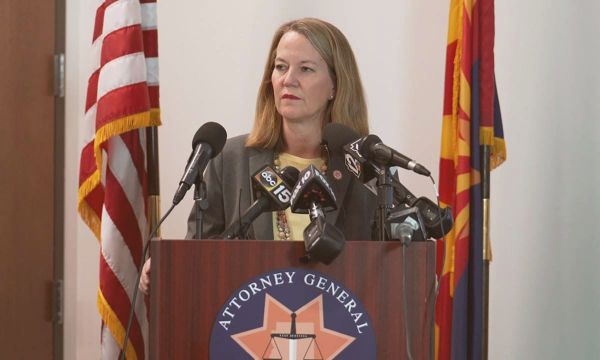
The push comes after a year of conflict-of-interest allegations, recusal fights, and a staff firing that has put the commission's governance structure under scrutiny. Myers and Commissioner Kevin Thompson, both of whom failed to win reelection, faced four separate recusal requests from the Arizona Free Enterprise Club, Attorney General Kris Mayes, consumer advocate Abhay Padgaonkar, and the Arizona Solar Energy Industries Association. All four requests centered on public statements the two commissioners made about pending Arizona Public Service and Tucson Electric Power rate cases. The ACC's code of ethics cautions commissioners against prejudicial public statements, and the commission operates under ex parte rules that bar substantive outside communications about active rate cases. Thompson and Myers rejected all four requests, arguing their public statements did not compromise their impartiality.
Padgaonkar went further, filing a formal ethics complaint against Thompson. The ACC's general counsel, Tom Van Flein, investigated and dismissed it. Van Flein also serves as the commission's ethics officer, a dual role that stakeholders and Van Flein himself have questioned. Brown said the commission should consider establishing an independent panel to review ethics complaints rather than routing them through the chief legal counsel, and should add a mechanism allowing a commissioner majority to vote to recuse a colleague when there is a clear code violation.
Who is behind the staff firing?
Executive Director Doug Clark fired a policy advisor who worked for Commissioner Lea Márquez Peterson without Peterson's consent. The commission is now seeking two outside legal opinions on whether Clark had the authority to make that move. Energy policy consultant Amanda Ormond, of the Ormond Group, said the episode illustrates a structural problem: an executive director who controls the hiring and firing of commissioner staff can, in effect, shape the policy recommendations those staff members make.
The staff dispute intersects with Myers' own post-commission plans. Myers told the Capitol Times in October that he may seek the commission's deputy executive director role after his term ends. The commission's public information officer said the ACC is not currently hiring for that position and that the role remains under organizational review. Ormond said Myers pursuing a staff role would run counter to the voters' decision not to return him to the commission.
Outside money remains a parallel pressure point. The ACC's code of ethics bars commissioners from accepting donations from regulated utilities and requires them to return such contributions or recuse themselves from related votes. The code does not cover independent expenditures made without a candidate's coordination. Outside groups spent over $2 million on the 2026 race for two commission seats, including $1.5 million supporting Democrats Clara Pratte and Jonathon Hill. Brown suggested the code could be tightened to require any entity receiving utility money to certify it will not use those funds to influence commission elections.
Sen. Lauren Kuby, D-Tempe, who will chair the Senate's new Climate, Energy and Natural Resources Committee, said a bill that would have barred regulated utilities from donating to political action committees or political nonprofits, introduced by Senate President-elect Priya Sundareshan, is likely to return in the 2027 session.
Myers' term ends in January; any ethics code changes he does not finalize before then will fall to the incoming commission.
Where to find them
- Ormond Group · ormondgroup.com
Sources
Every factual claim in this article traces to one of the sources below. See how we work for the editorial process.
- azcapitoltimes.com retrieved 16/11/2026 18:10
- Ormond Group (official site) retrieved 16/11/2026 18:10
Authored by The Scottsdale Signal. Drafted by AI from primary-source material under our beat-specific editorial guides; reviewed by humans before publish under our five-gate process. Sources retrieved at 16/11/2026 18:10. Every claim traces to a source.